
UC San Diego · 2023–2024
Triton Robot
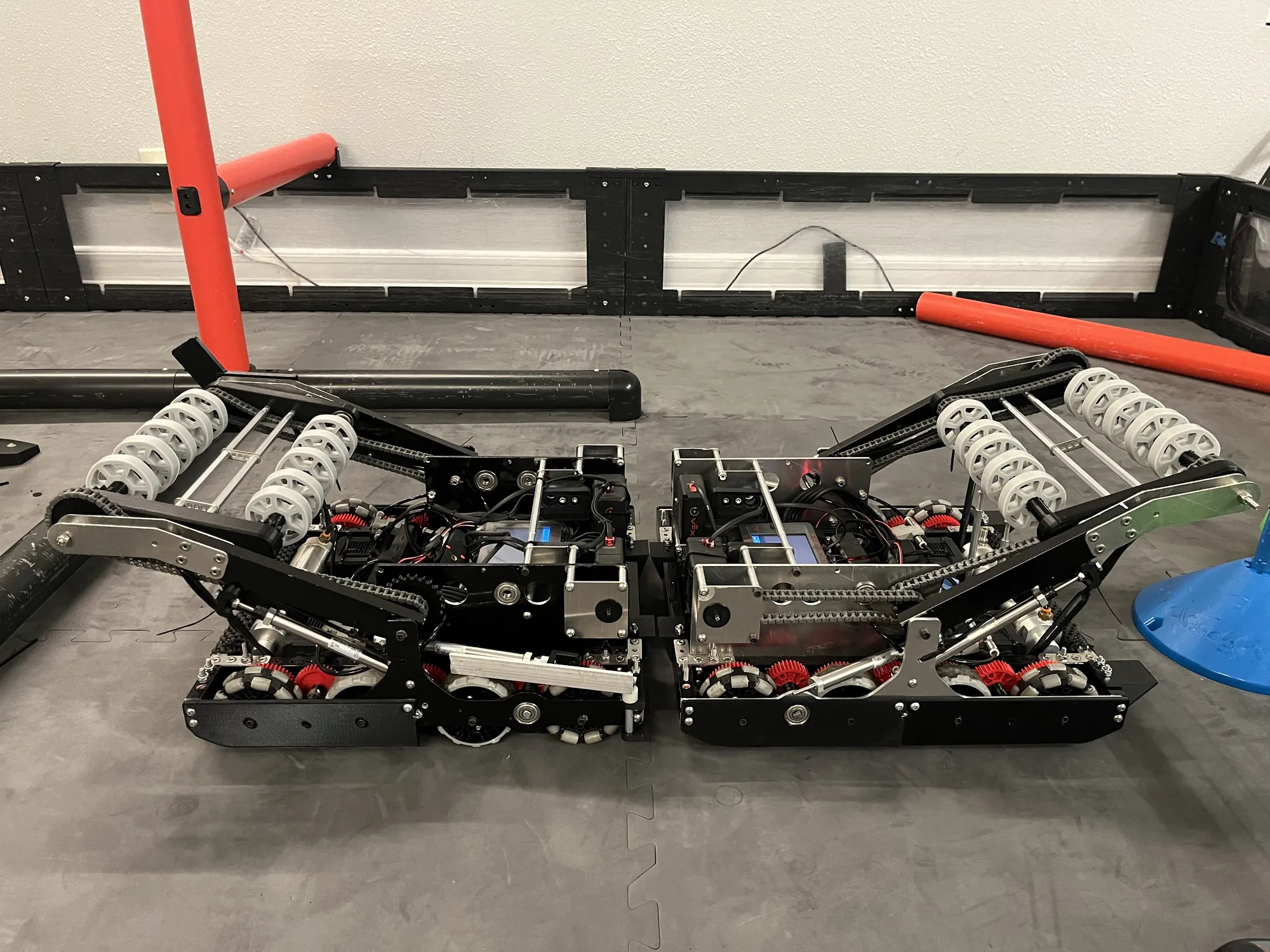
A four-wheel mecanum competition robot built the hard way: nearly every structural part cut from 6061 plate on a mill or waterjet, then finished by hand. The season’s real output was a manufacturing process that could turn a CAD release into a tray of finished parts.
Plate as a structural system
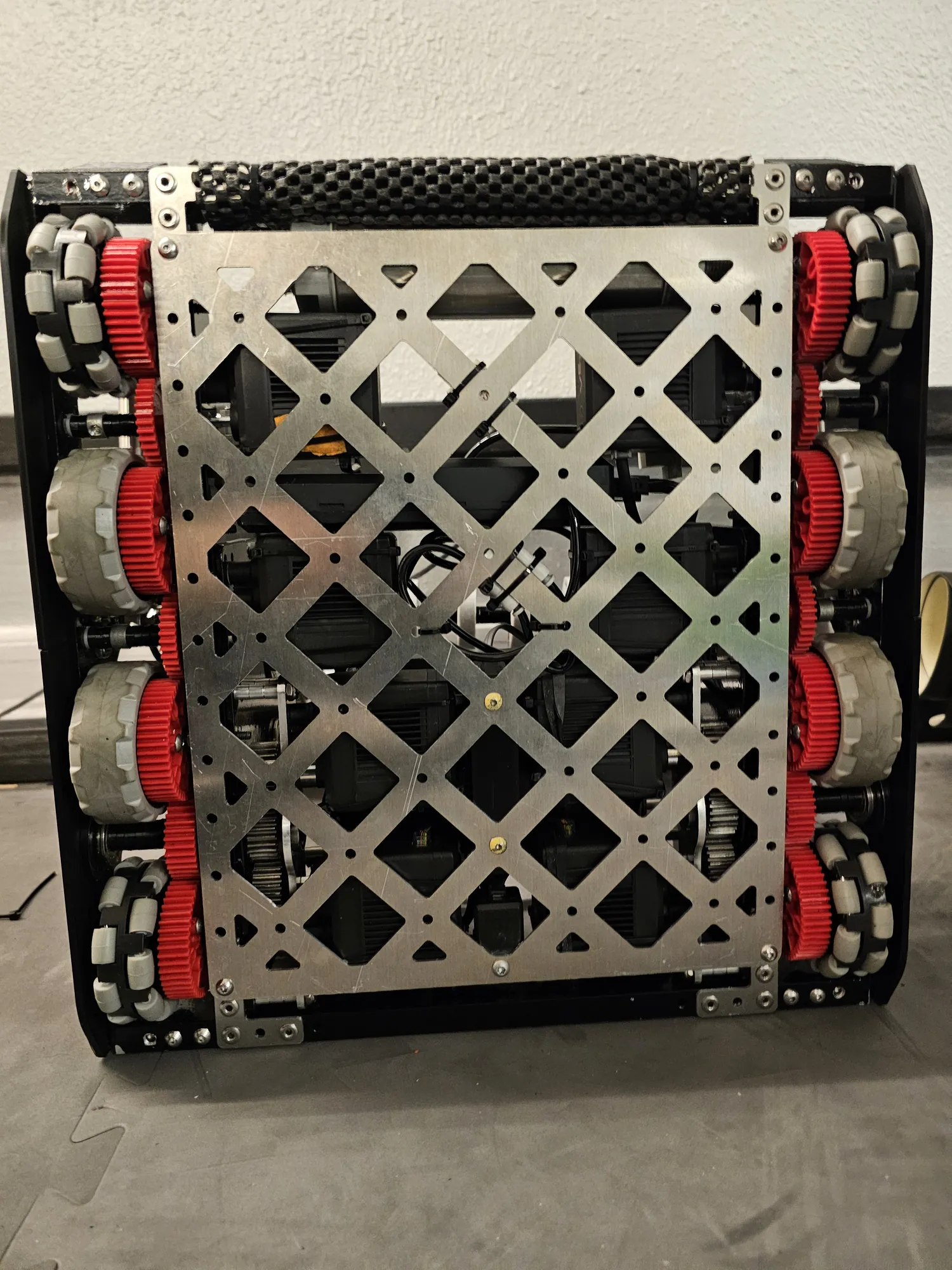
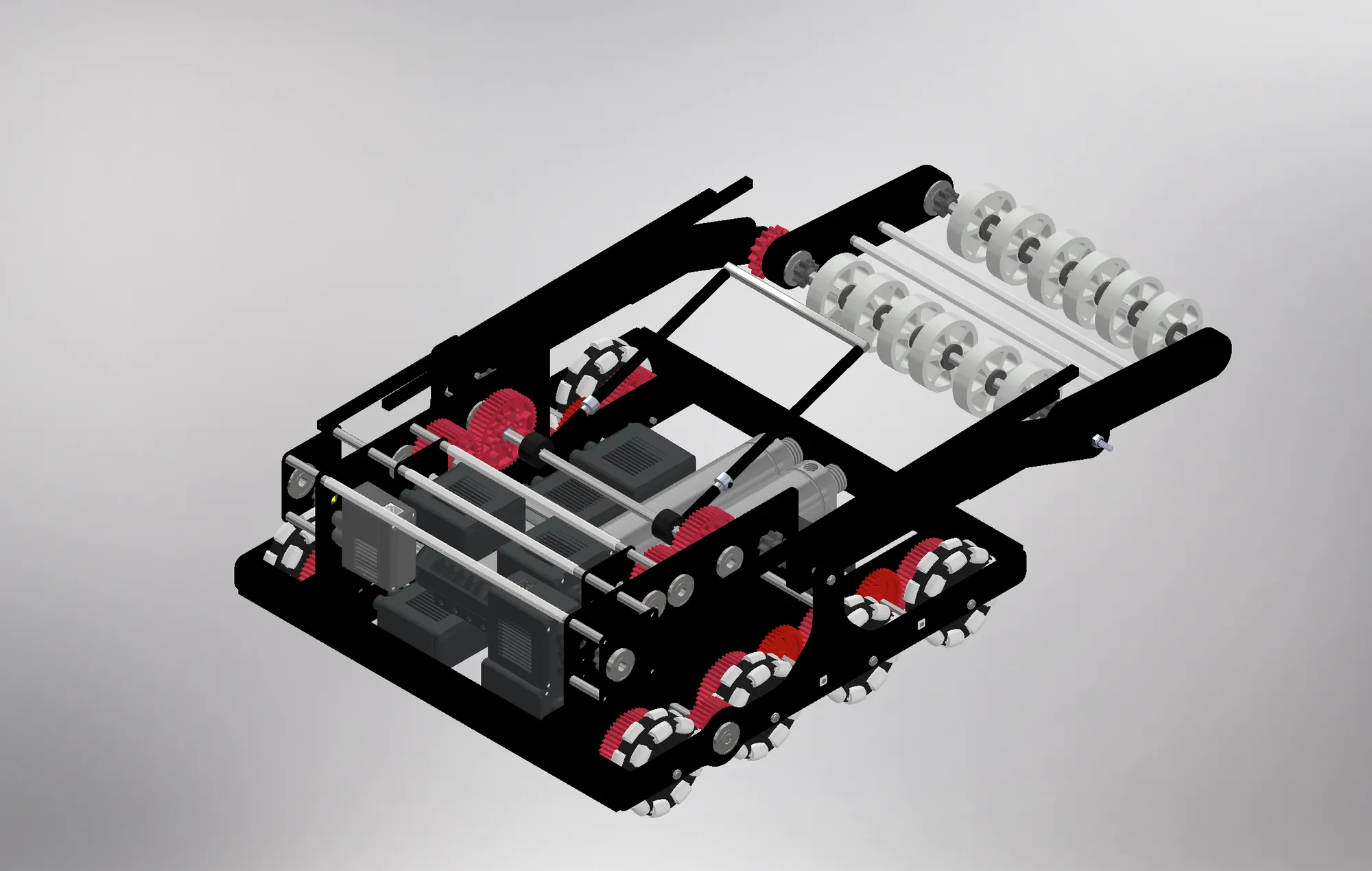
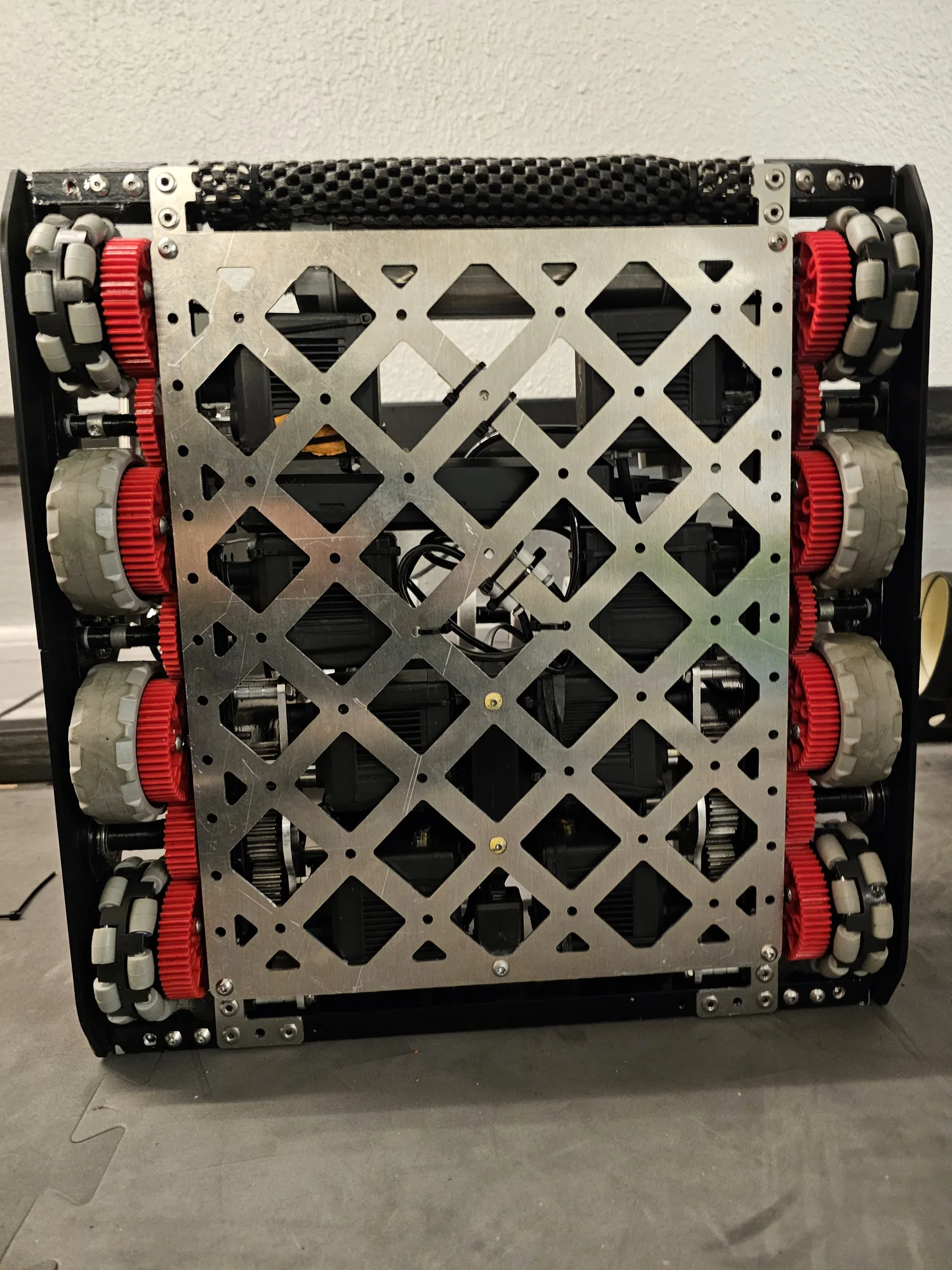
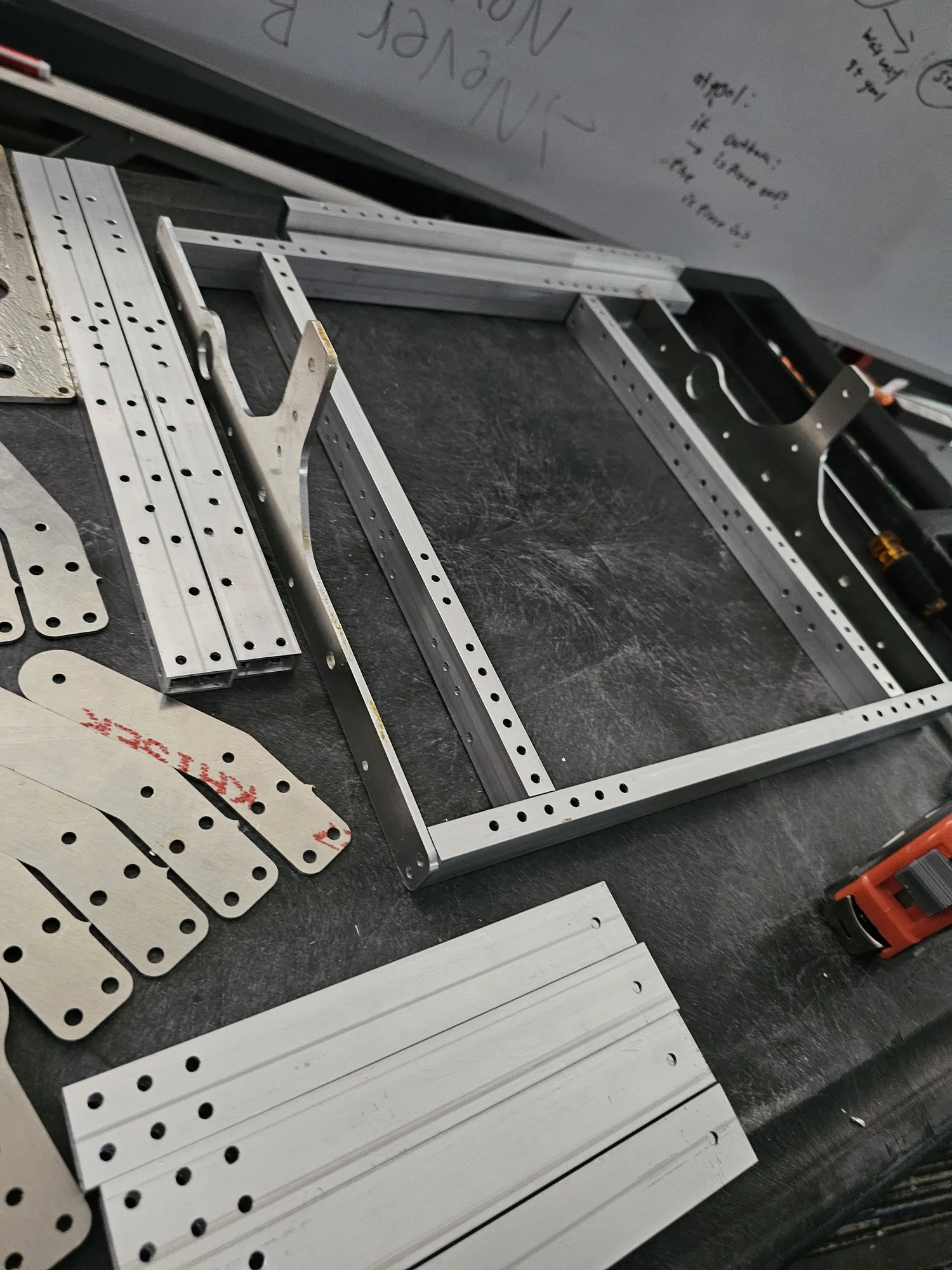
The chassis is a stack of flat parts rather than a welded frame: every plate cut in two dimensions, then bolted into three. It trades some stiffness for something more valuable on a student team: any part can be recut and swapped without touching its neighbours.
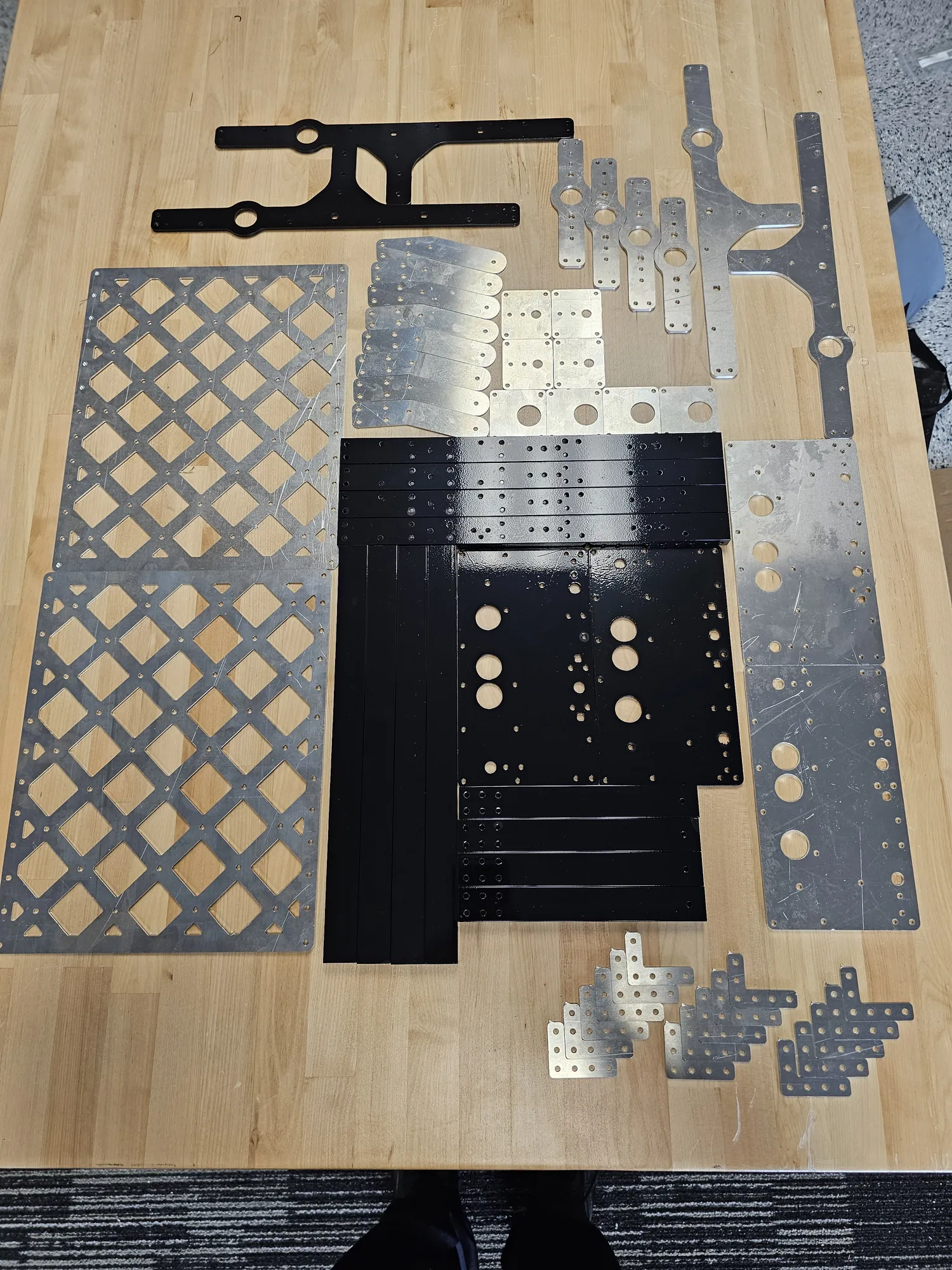
Mass came out through lattice cutouts on the large panels, which is also what keeps a plate that size from ringing.
Making the parts
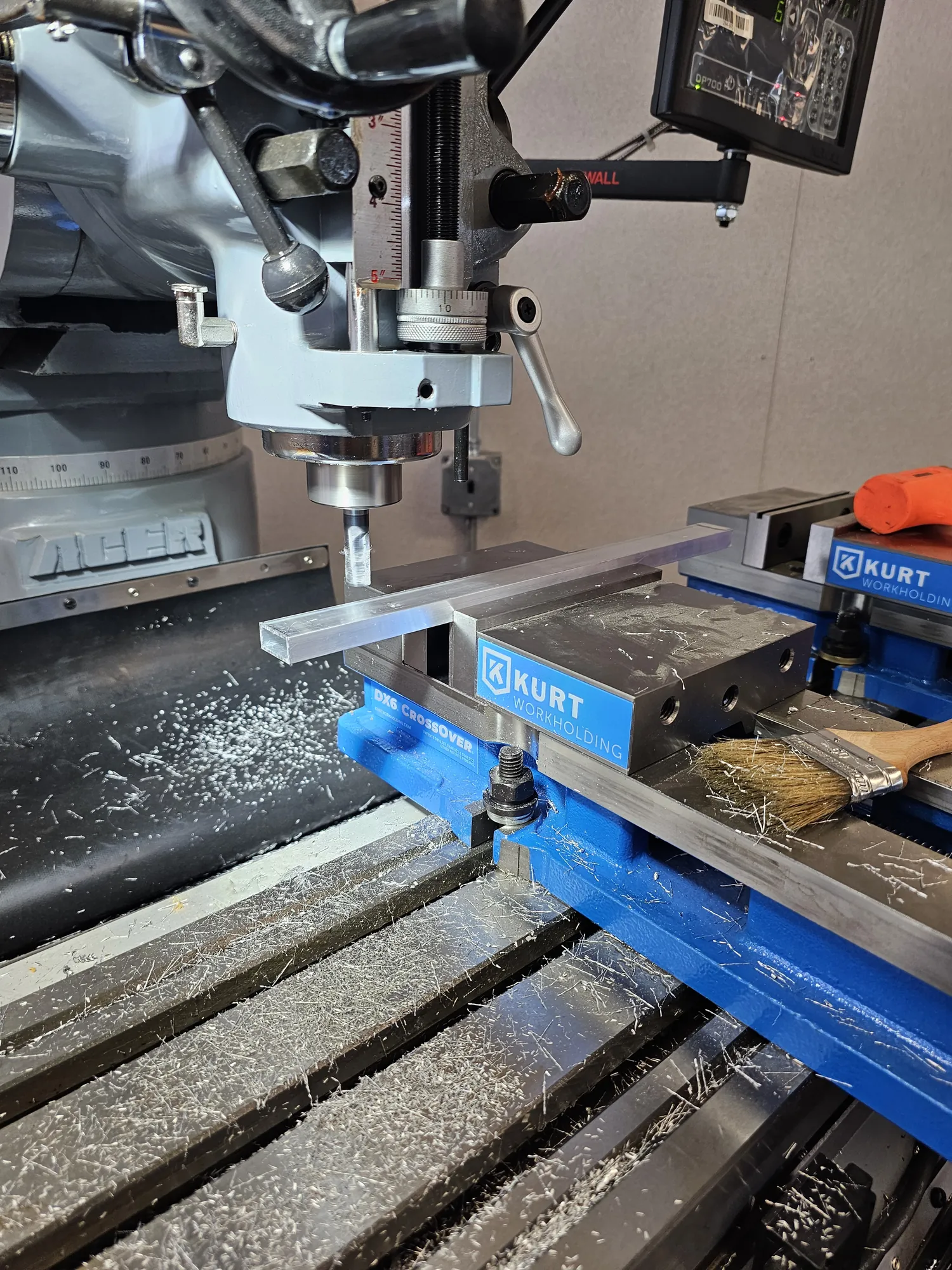
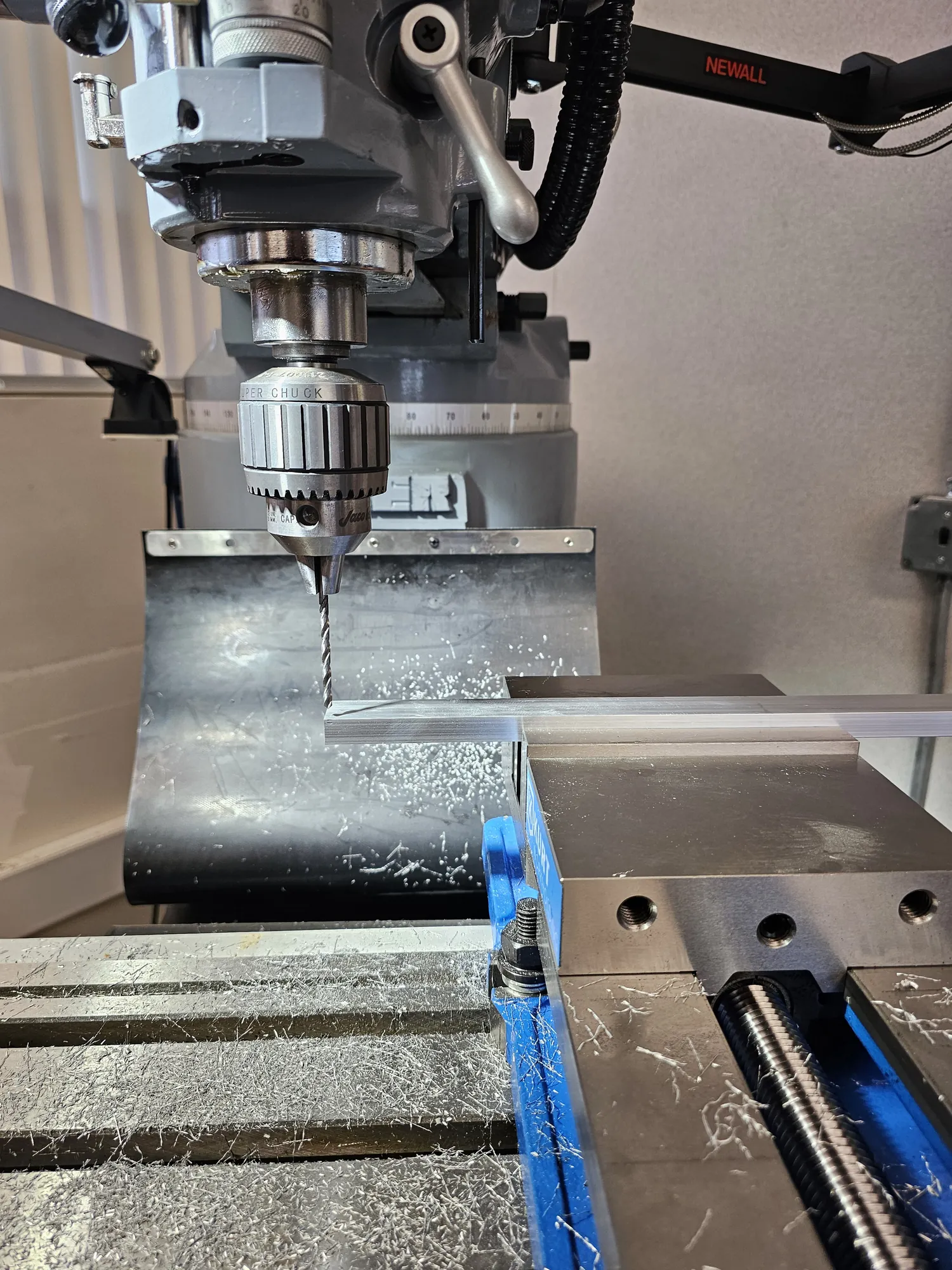
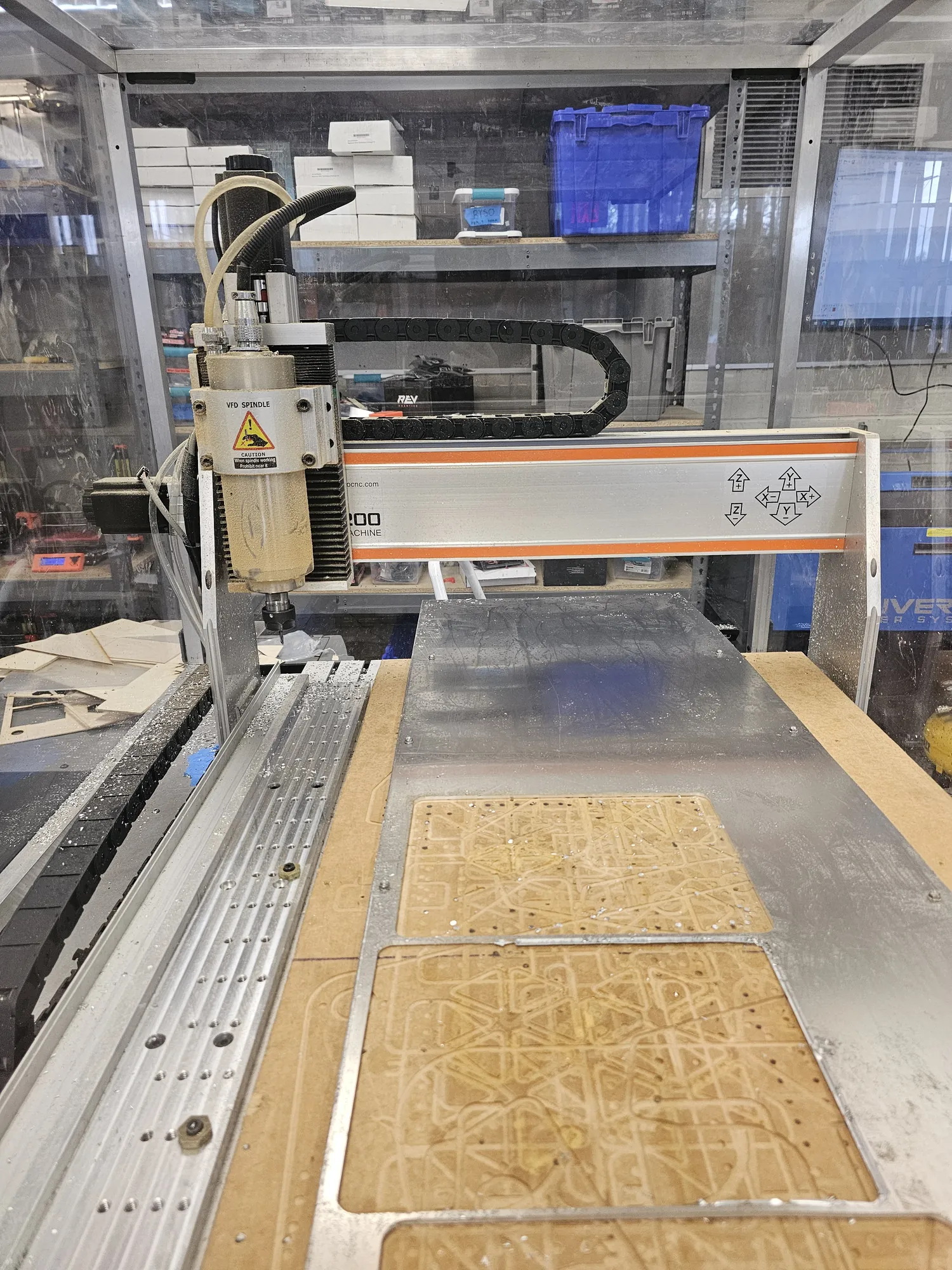
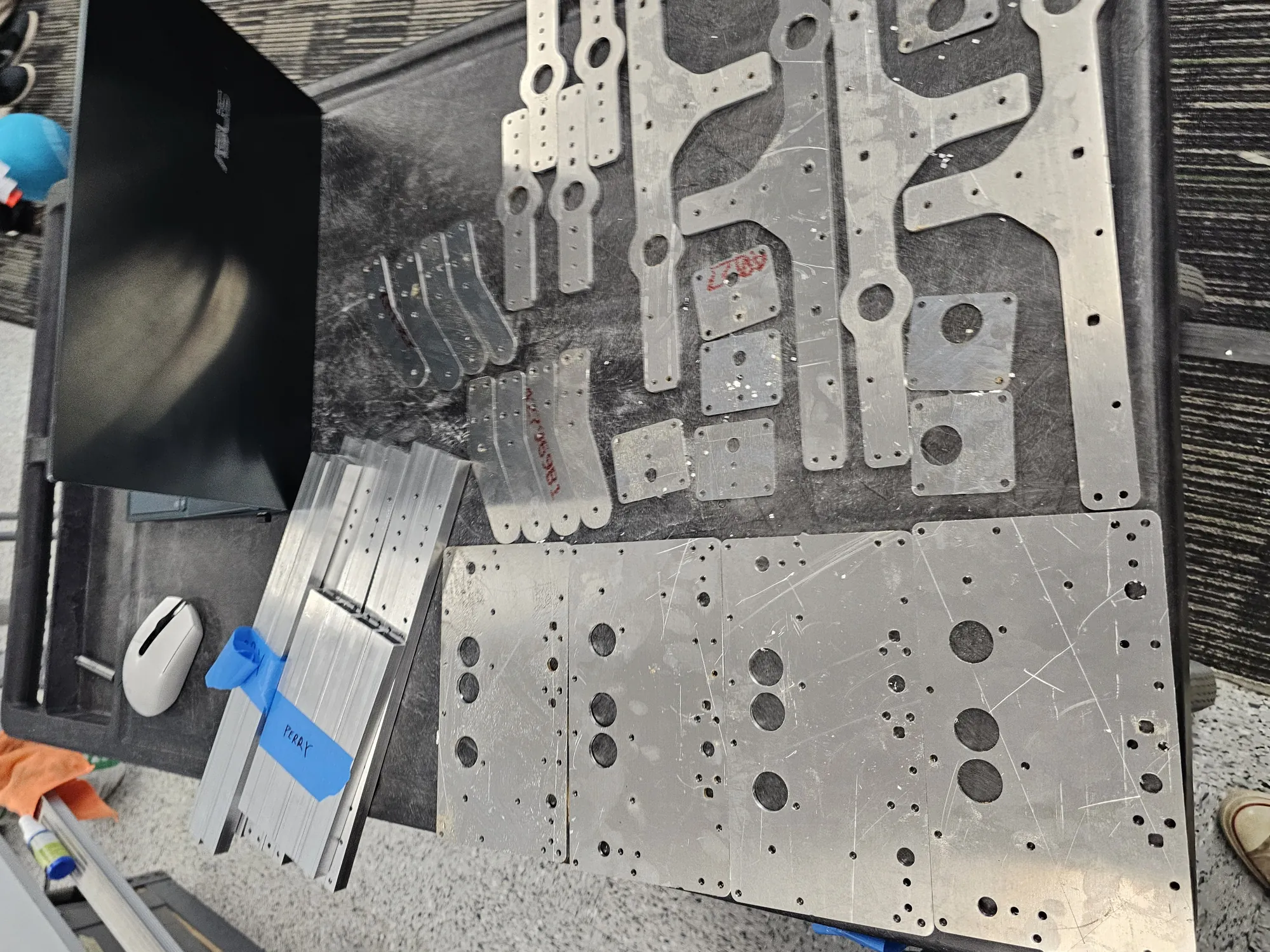
Roughing and profiles on the CNC mill, thin flat parts on the waterjet, and features the machines could not reach done manually on the mill. Parts came off in batches and got laid out, checked, and deburred as sets rather than one at a time.
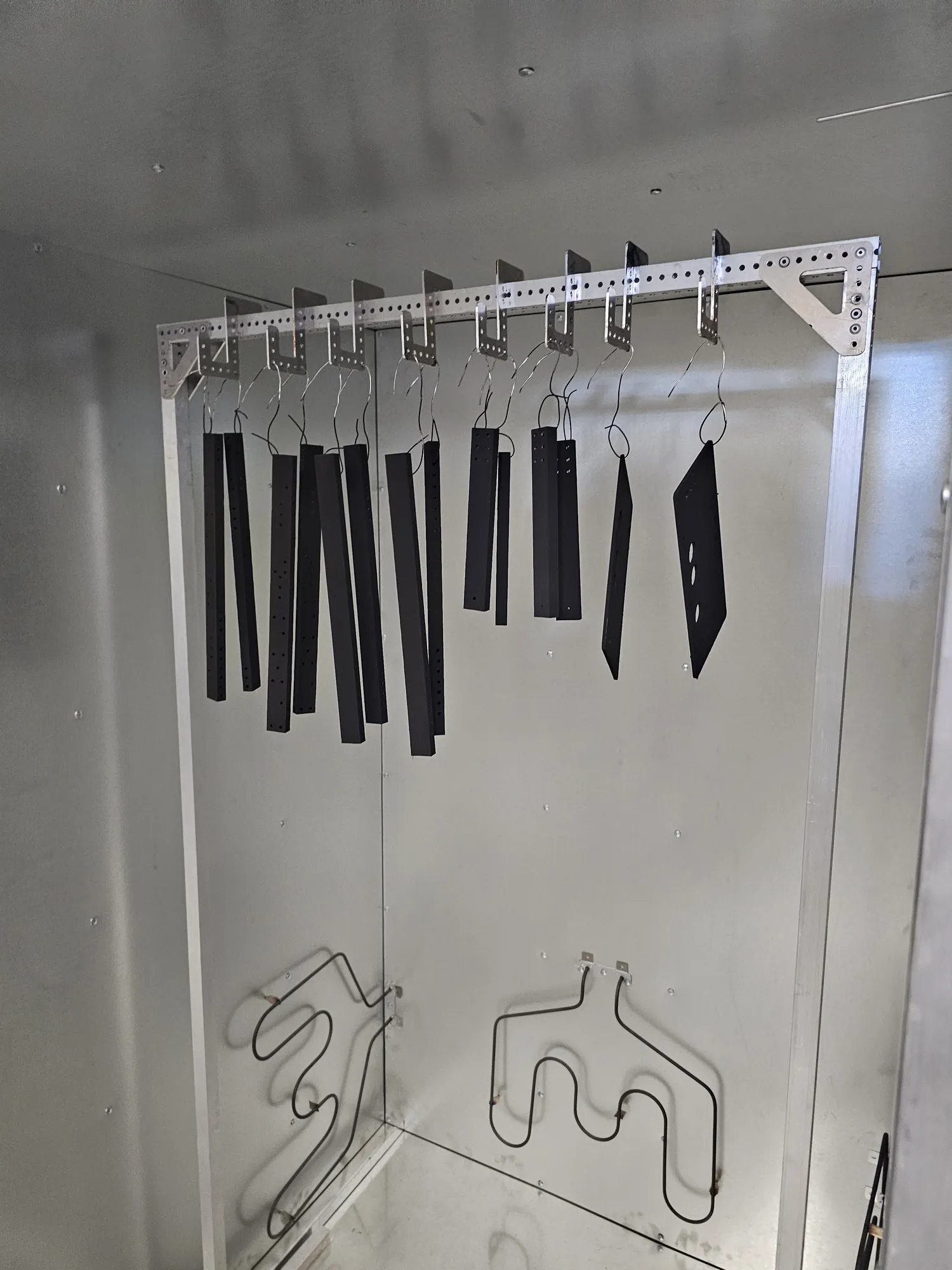
Anodised black and bare aluminum parts were kept visually separate through finishing so a tray never had to be sorted twice.
On the floor
Assembled onto mecanum wheels for omnidirectional drive and run against another machine in the arena, which is where the plate-and-bolt decision earned itself back, because damaged parts came off and got replaced between matches.
 02
02Gallery
Cutting and finishing
Router, anodising rack, and the frame laid out.
Parts off the machines
Batched, checked, and deburred as sets.
Yonder Robotics