
Yonder Robotics · 2026
Robot Gripper
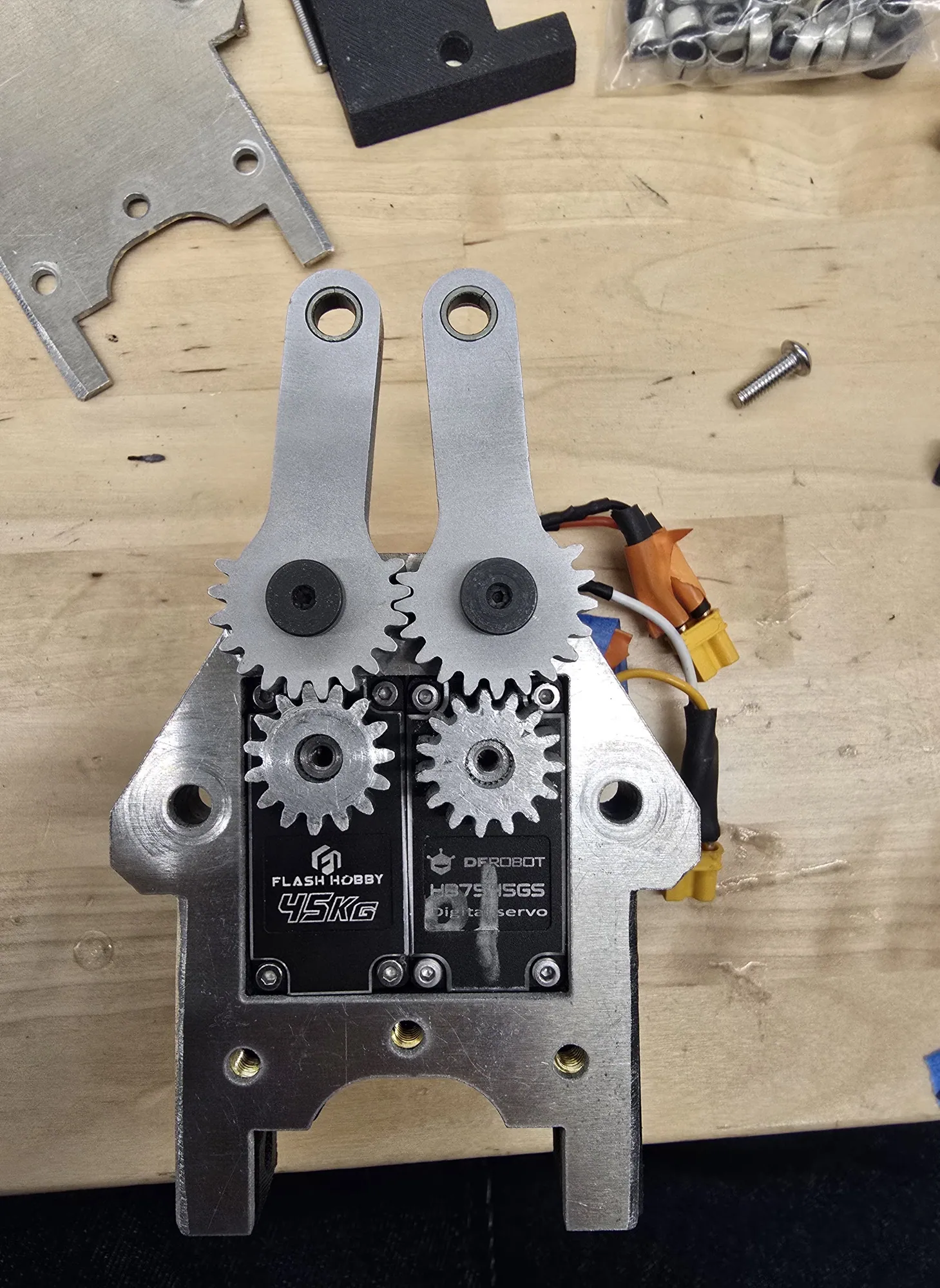
A servo-actuated parallel gripper with integrated infinite rotation. Two DF Robot 45 kg·cm servos feed a gear reduction driving dual four-bar linkages. Fingers stay parallel through full closure at 181 N, a 3.5 factor of safety on the 5 kg requirement.
Sizing the linkage
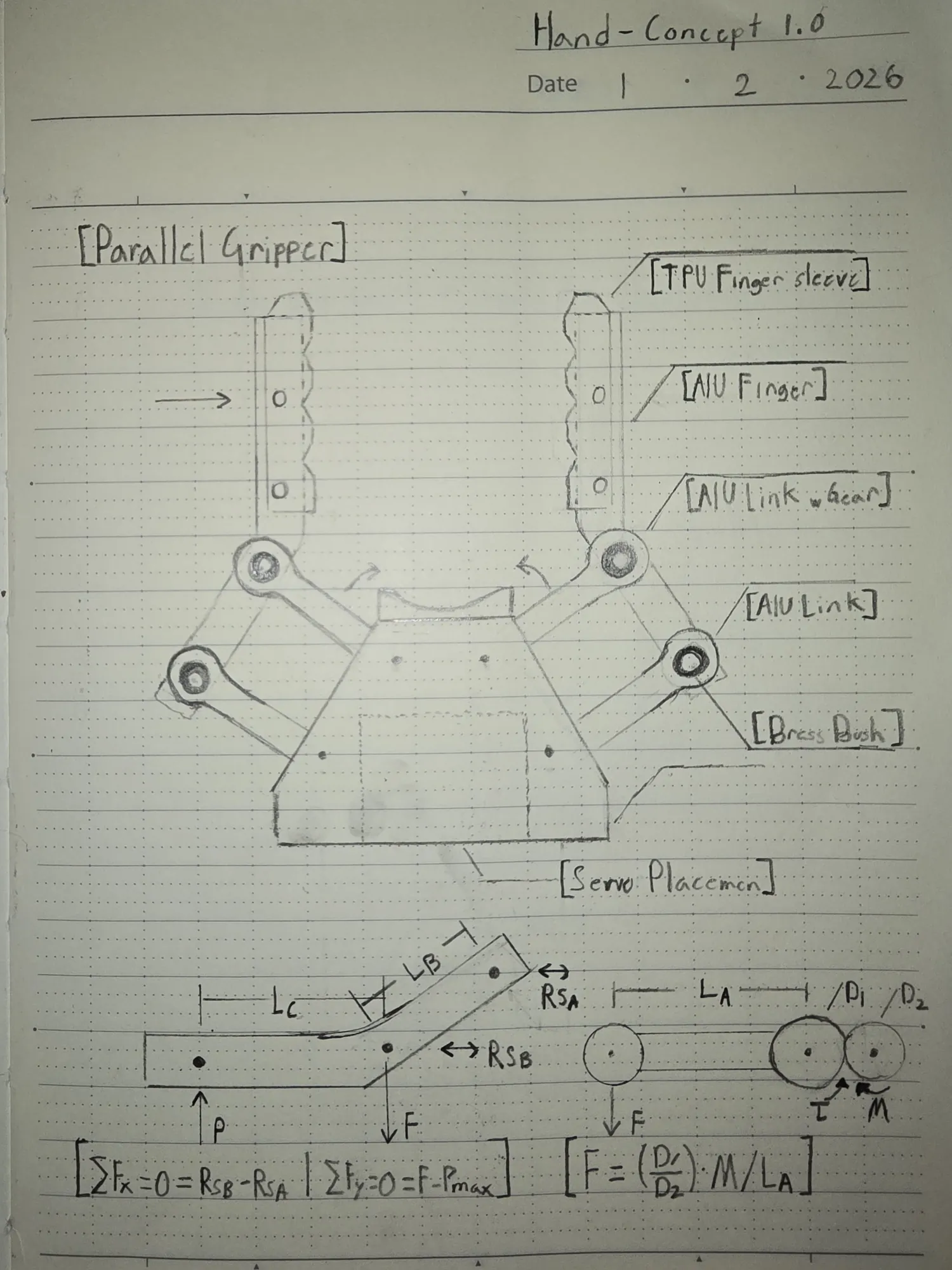
The grip number came first, on paper. The four-bar was laid out by hand with the servo lever arms marked on it, and grip force falls straight out of the ratio between them. Servo selection, the gear reduction, and the finger stock were all then chosen to hold that number through full closure rather than only at the tip.
Modularity as the driver
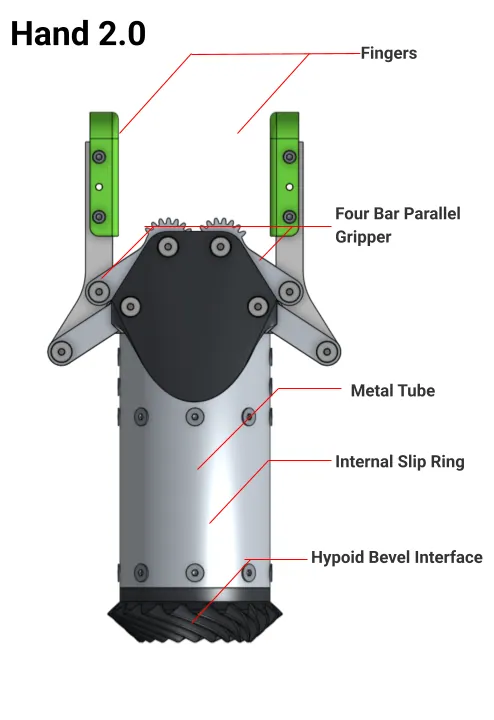
The gripper is independently replaceable. It comes off without redesigning the hand stem, so a future team integrates a new end effector against the same wrist and slip ring interface. Fingers are interchangeable too.
Rotation, structure, and gripping used to be entangled. Separating them is what makes the hand serviceable across seasons.
Packaging against the wrist
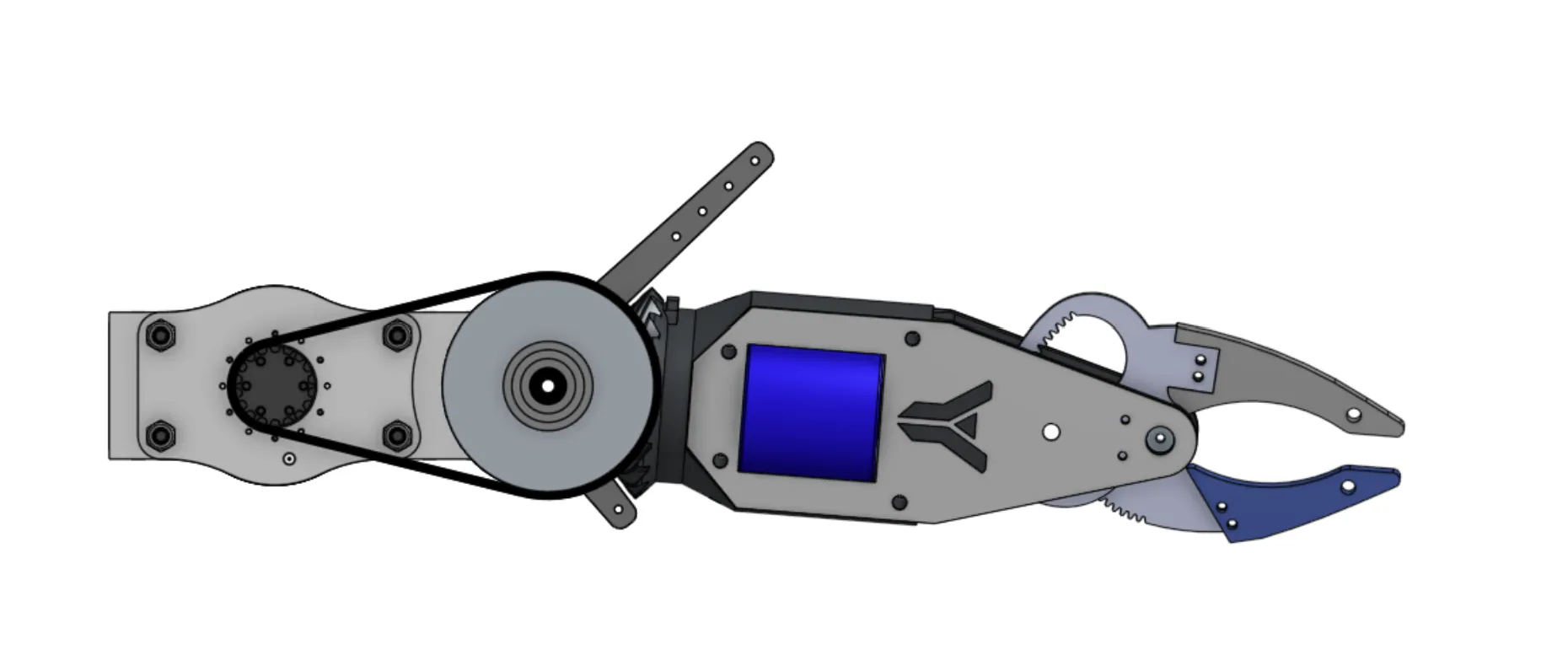
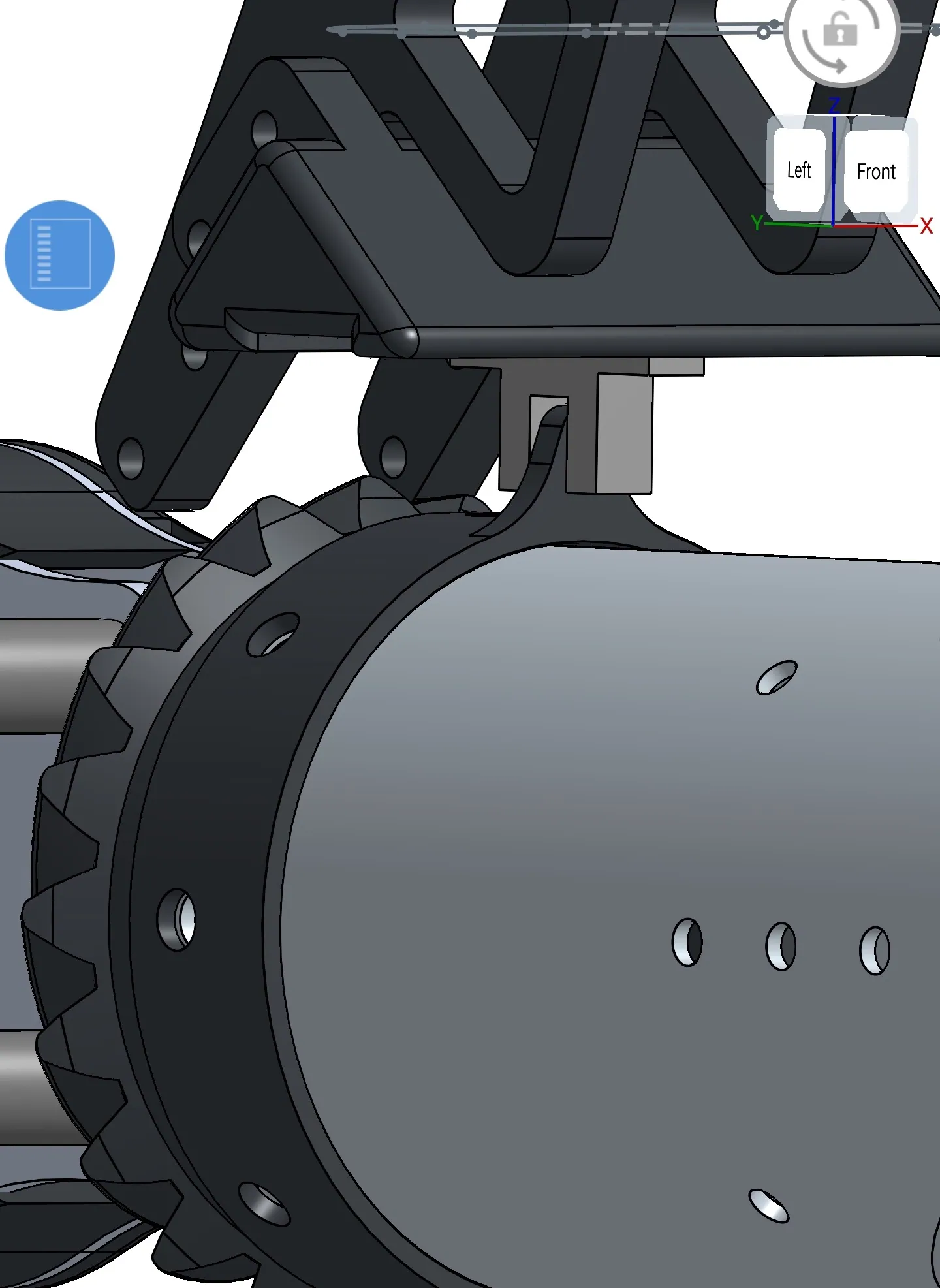
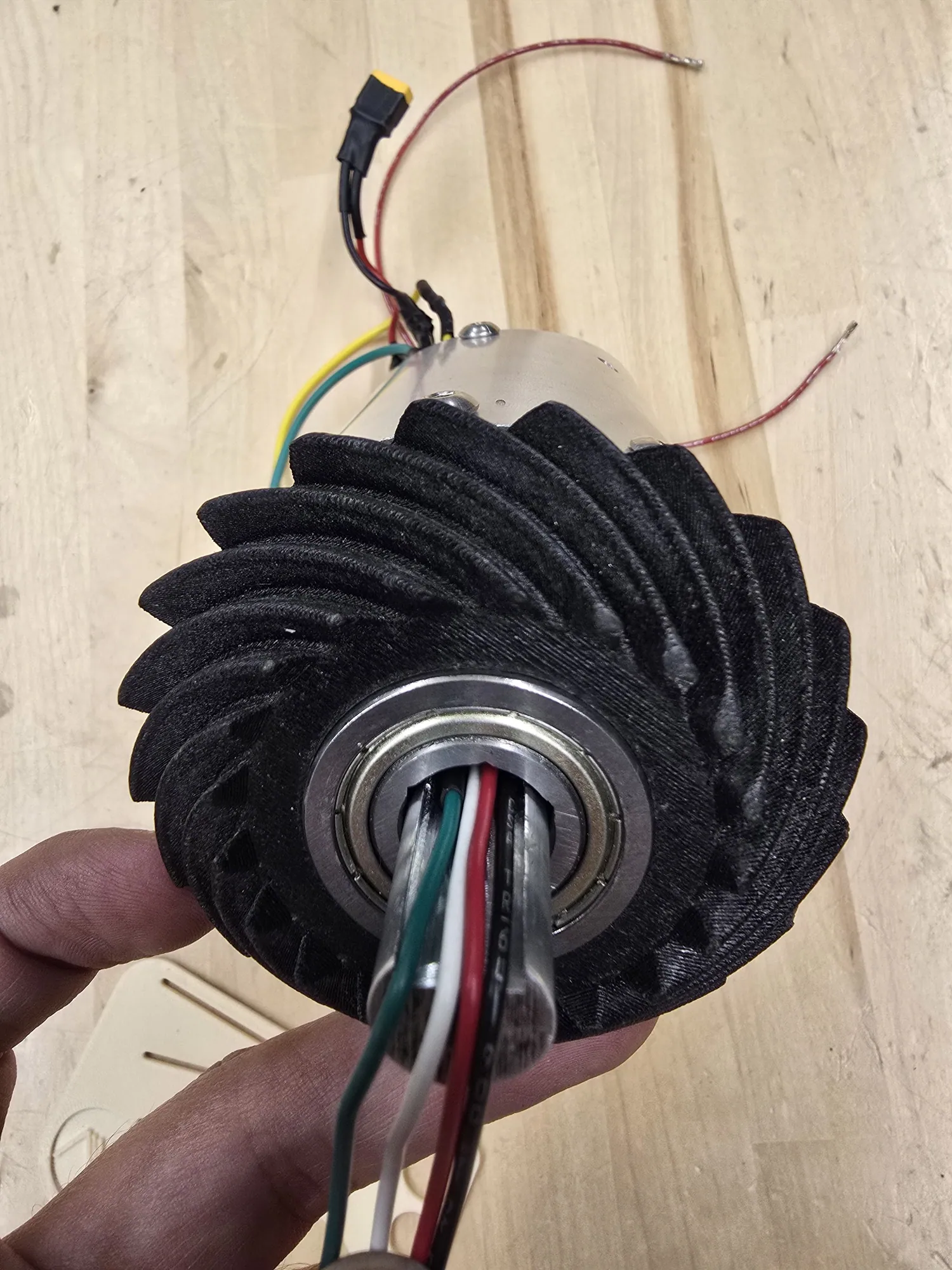
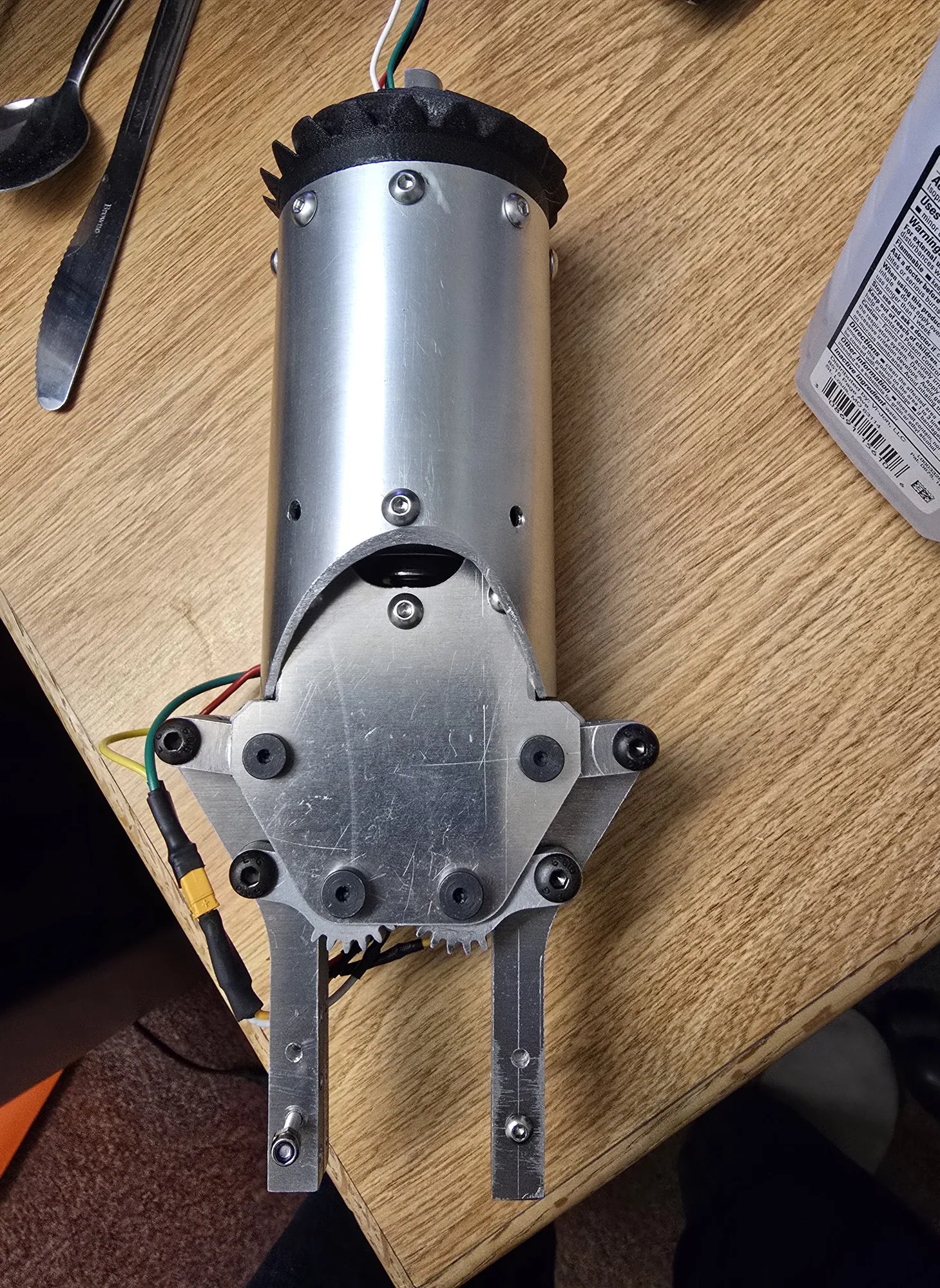
Wrist torque and size capped the hand at 0.3 m. A through-bore slip ring lets a keyed shaft pass straight through the stem: continuous rotation with no added length, and minimal bending moment fed back into the wrist.
Assembly
M4 and M5 fasteners throughout, with the slip ring housing captured by top and bottom aluminum caps carrying radial mounting screws: structural retention and service access from the same feature.
Every gripper joint pivots on an M5 shoulder bolt with a precision spacer, which is what keeps the four-bars aligned and the motion repeatable after the hundredth open-close.
Hybrid metal / plastic load path
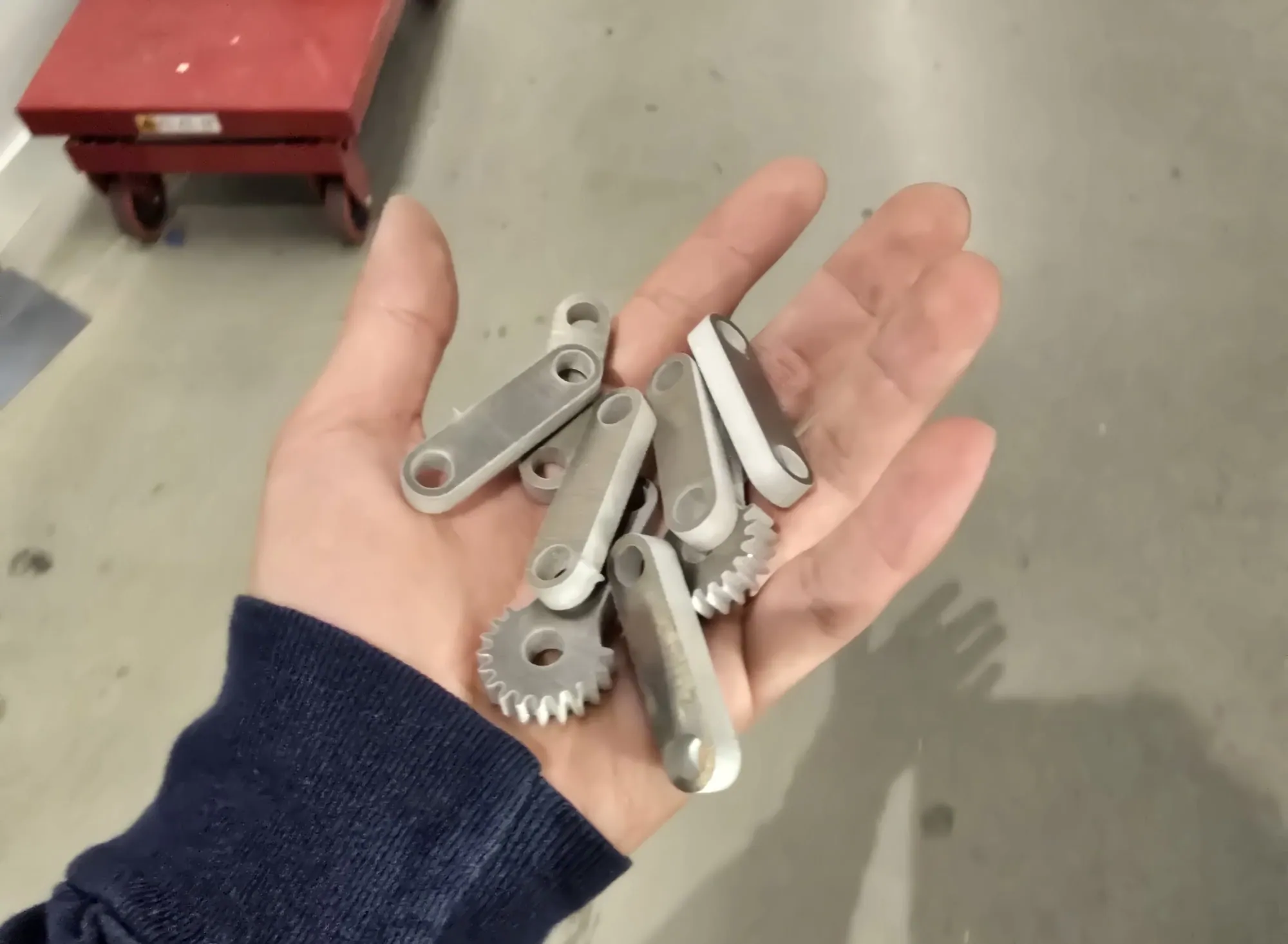
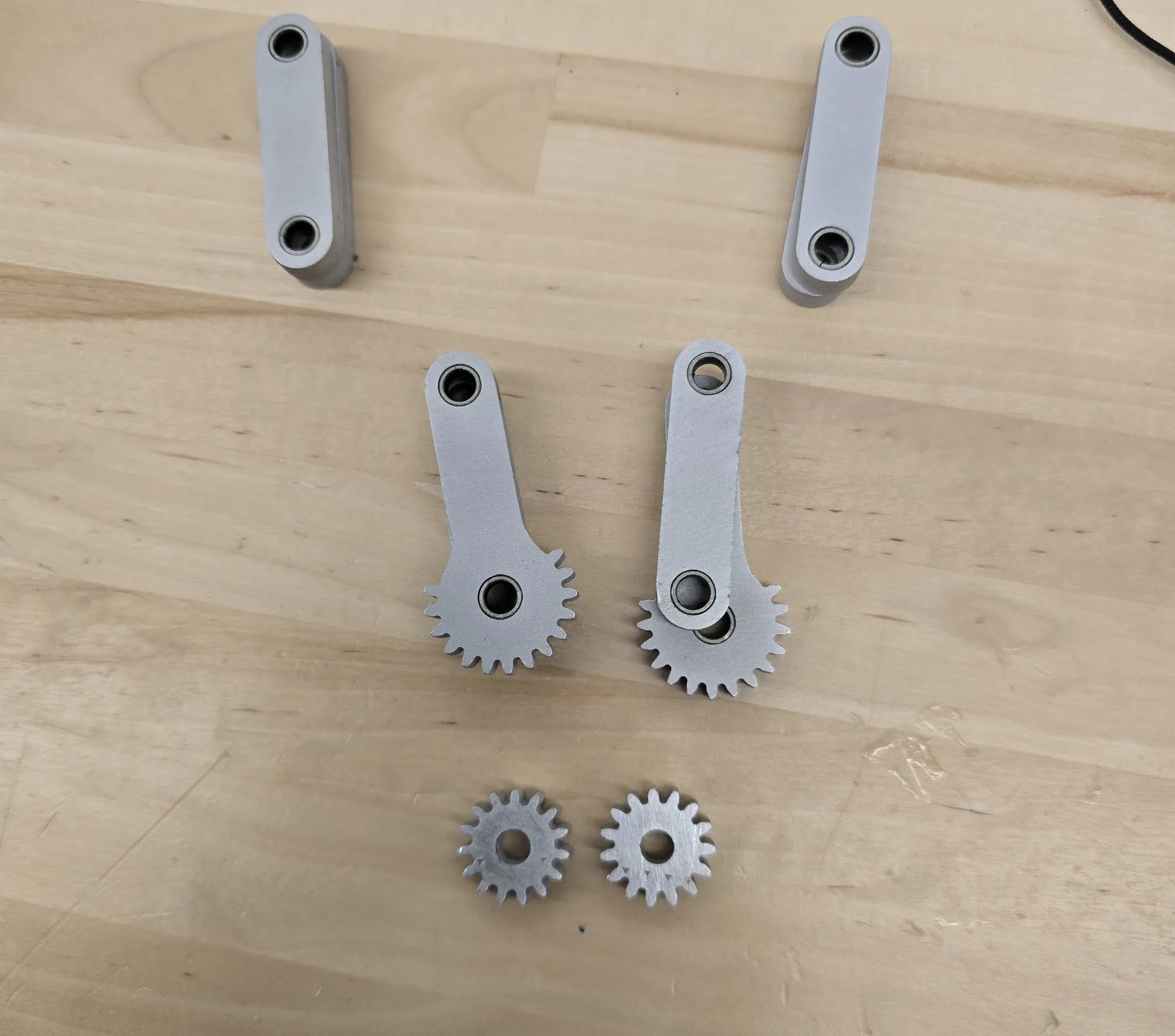
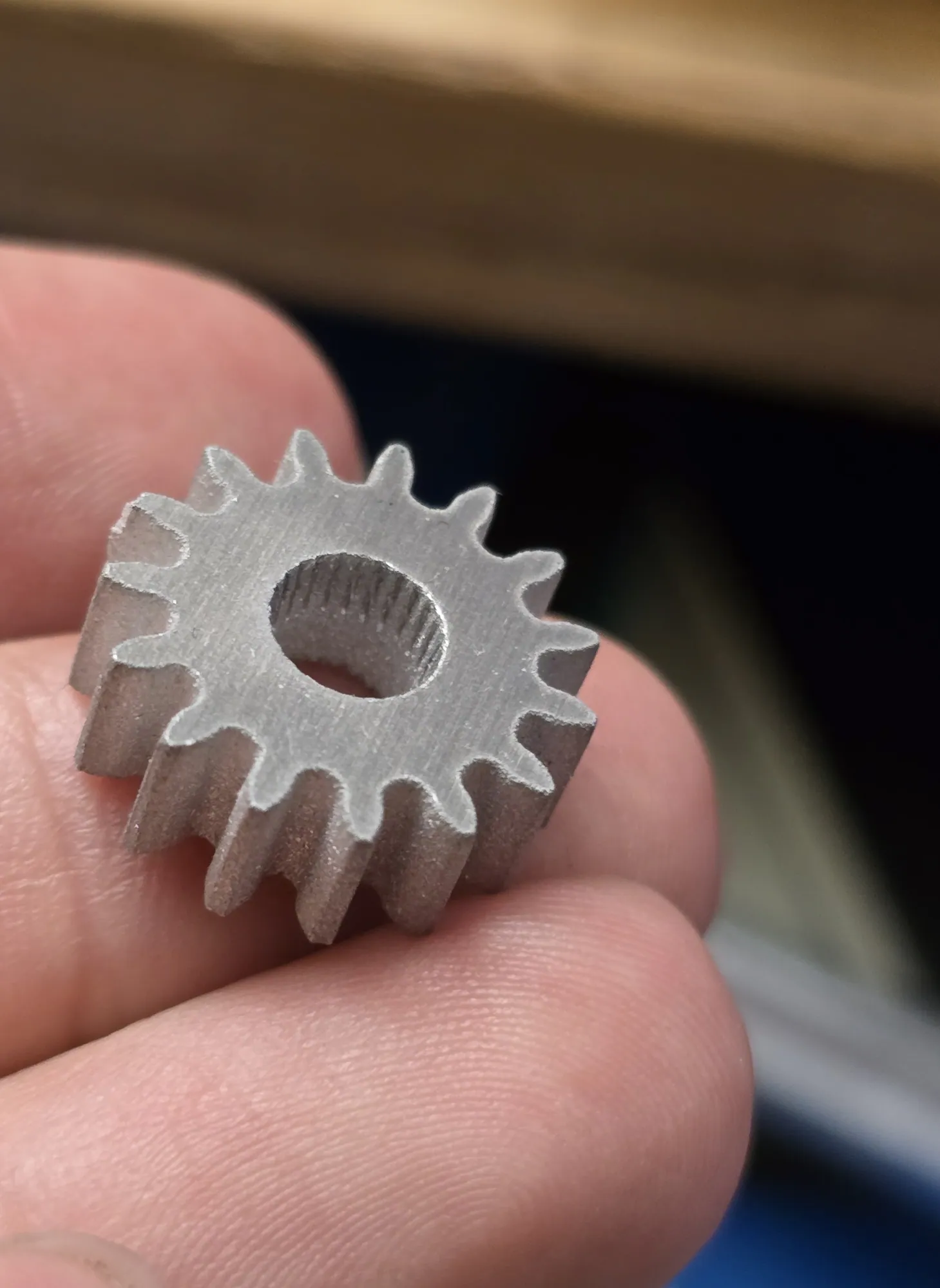
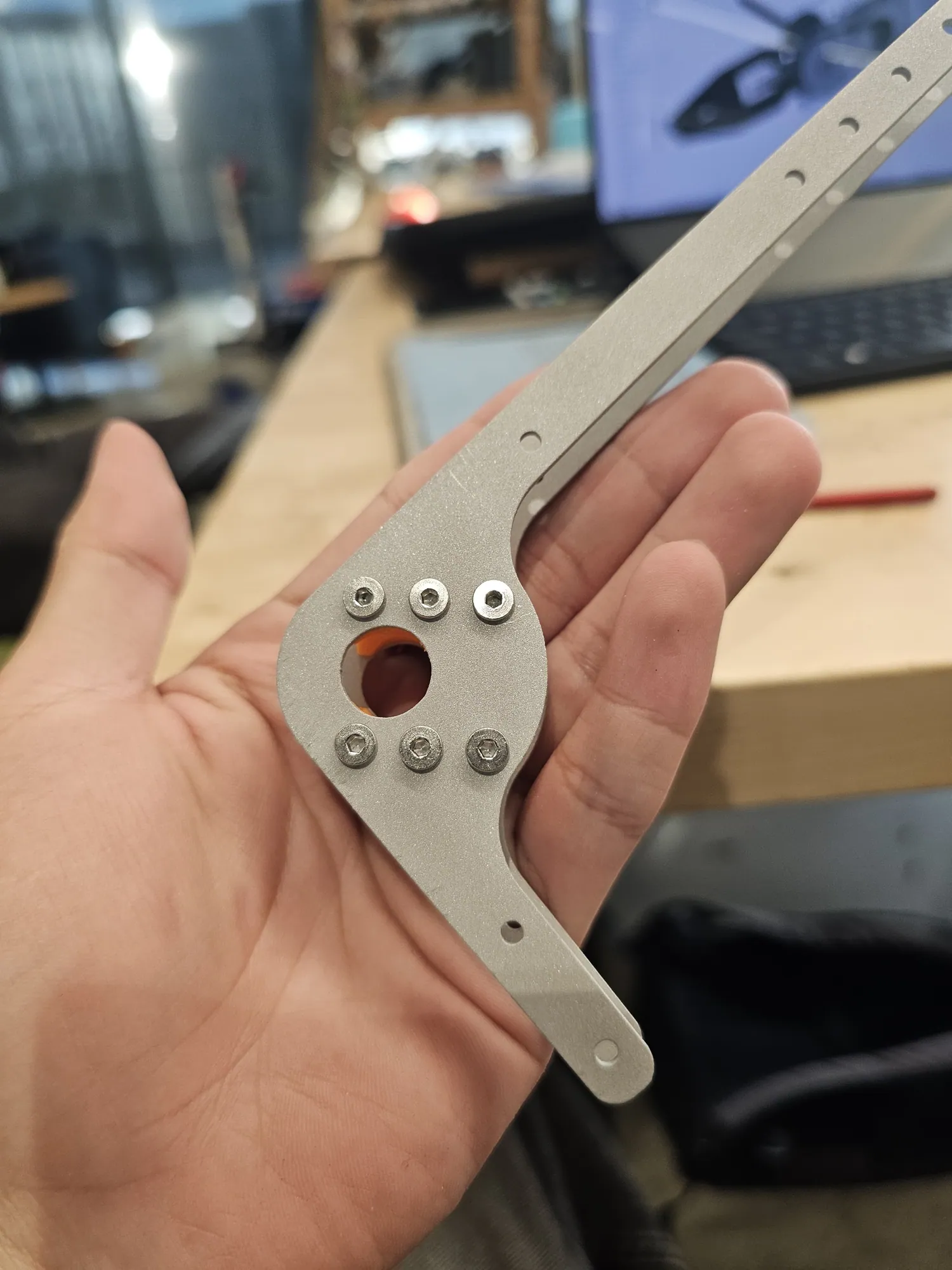
Fingers water-jetted from 1/4" 5052 aluminum, sandblasted and brushed to a low-friction finish at the bearing interfaces. Servo drive gears use stamped fine-pitch teeth.
The 6061 slip ring housing was machined by hand with a custom radial marking jig for hole placement. Structure and enclosures print in glass-fiber ABS on a Bambu P1S with a hardened nozzle. Joints pivot on M5 shoulder bolts with precision spacers.
Structural load stays in metal, mounting geometry stays in plastic. Rigidity without giving up iteration speed.
Gallery
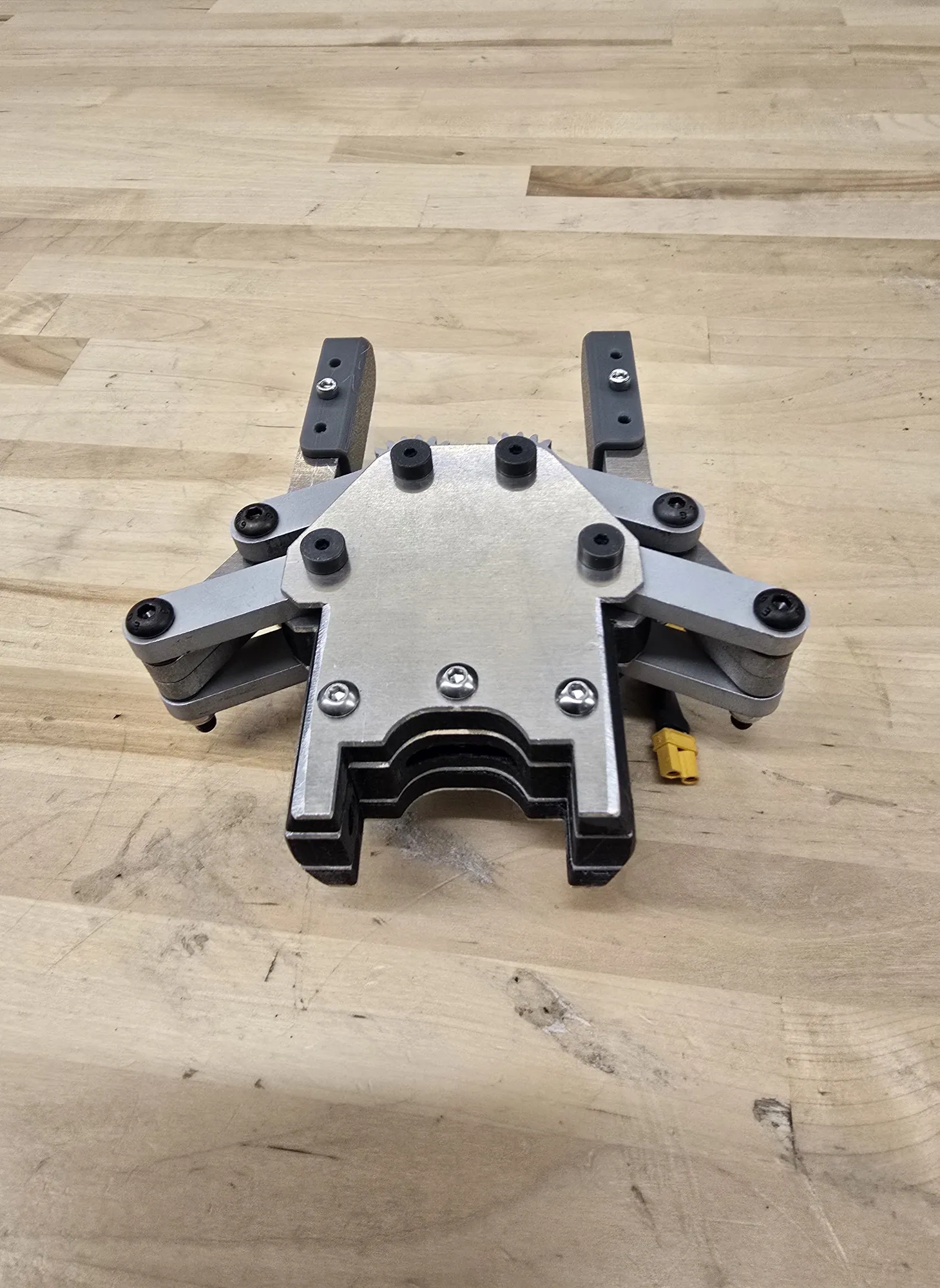
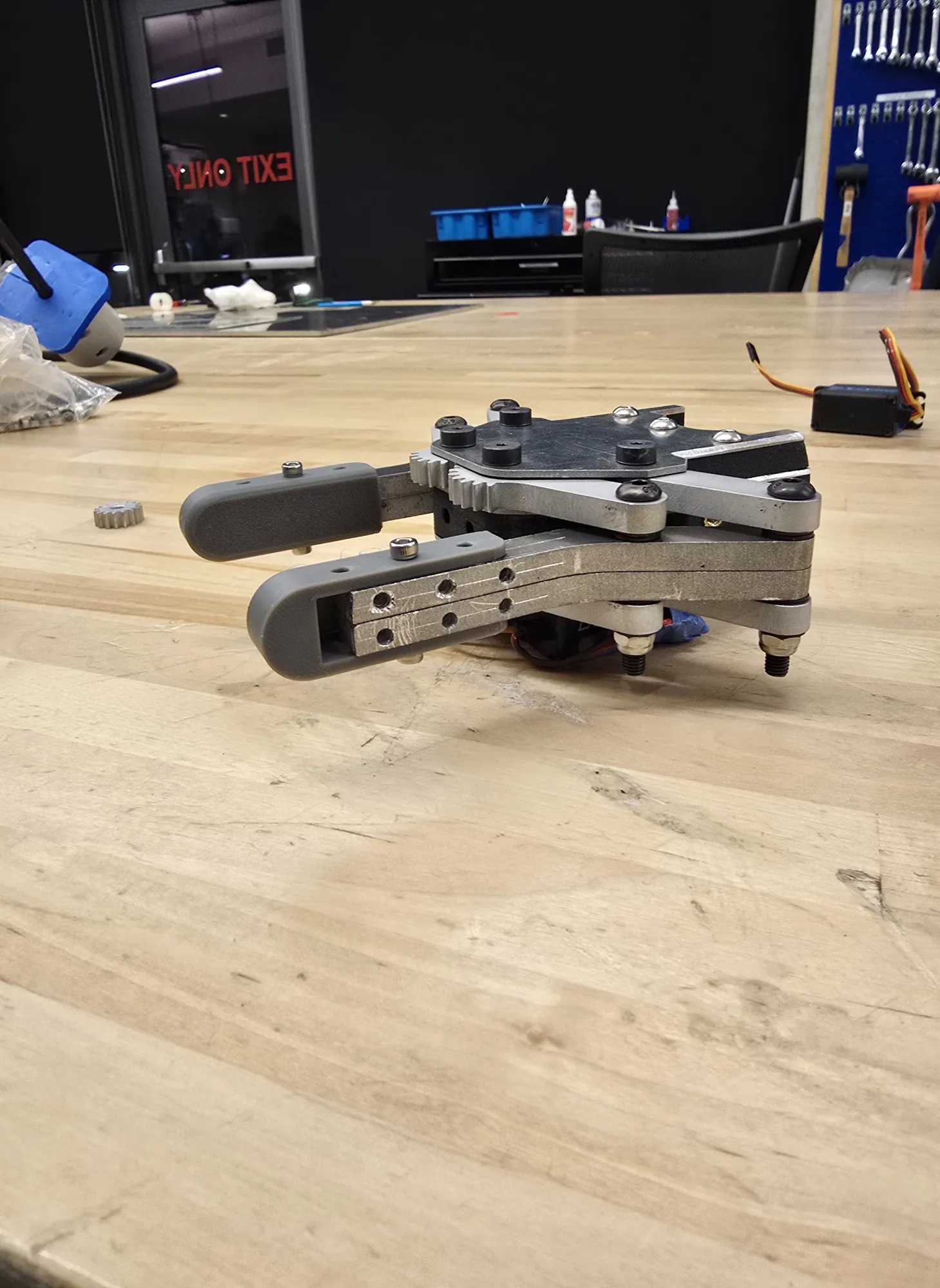
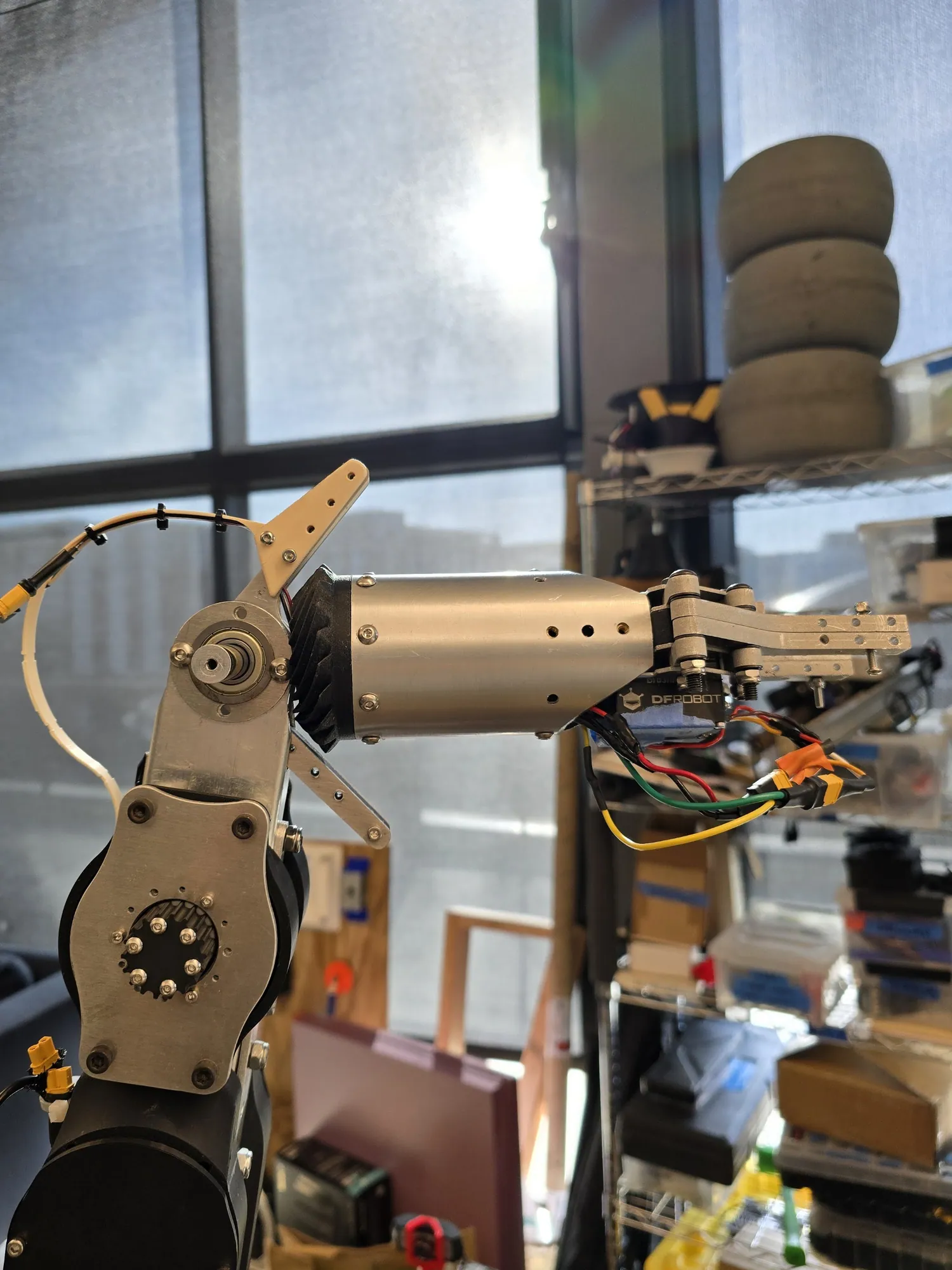
Gripper on the bench
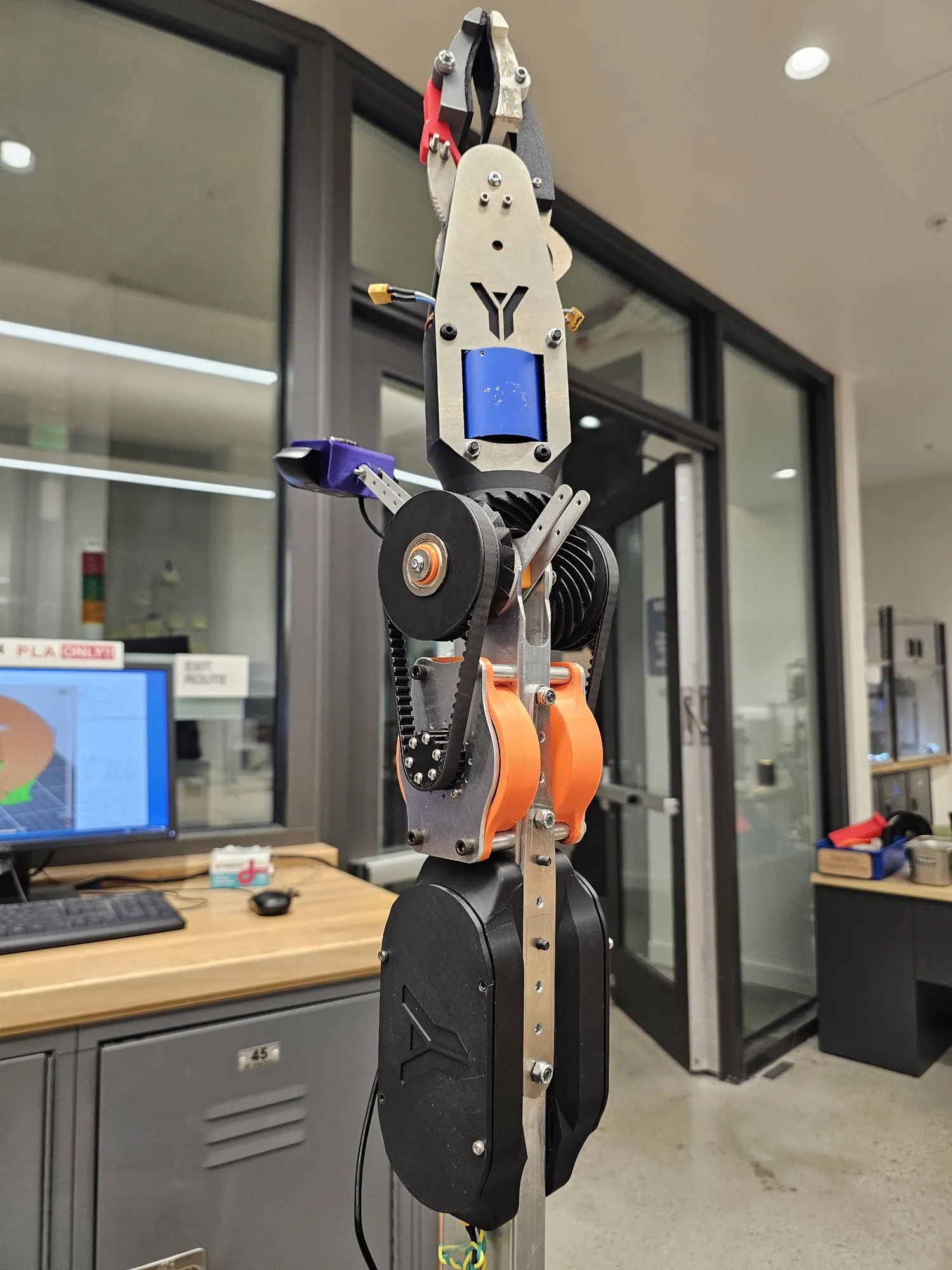
Aluminum fingers, TPU sleeves, and the printed prototypes before them.
Stem and slip ring
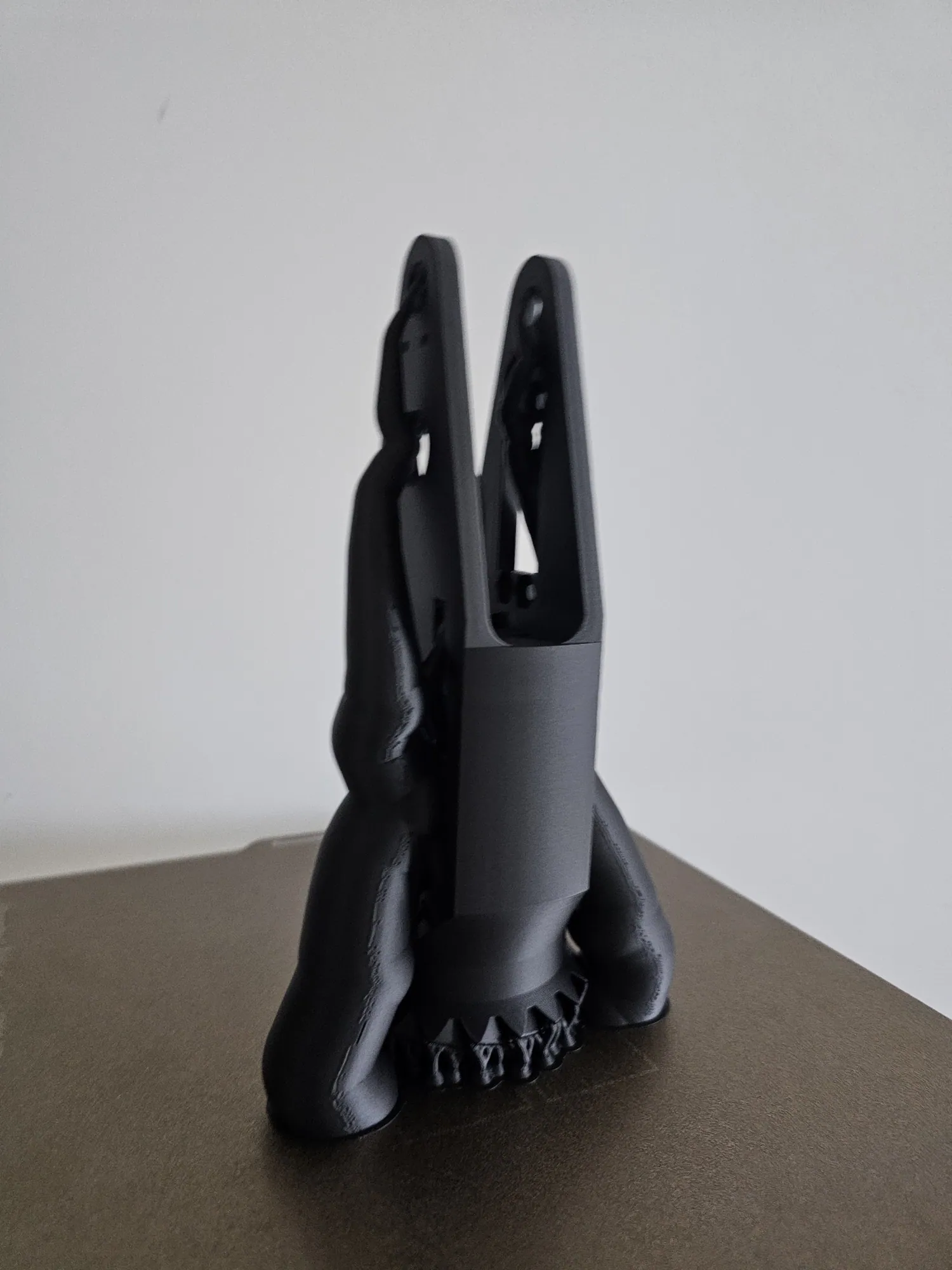
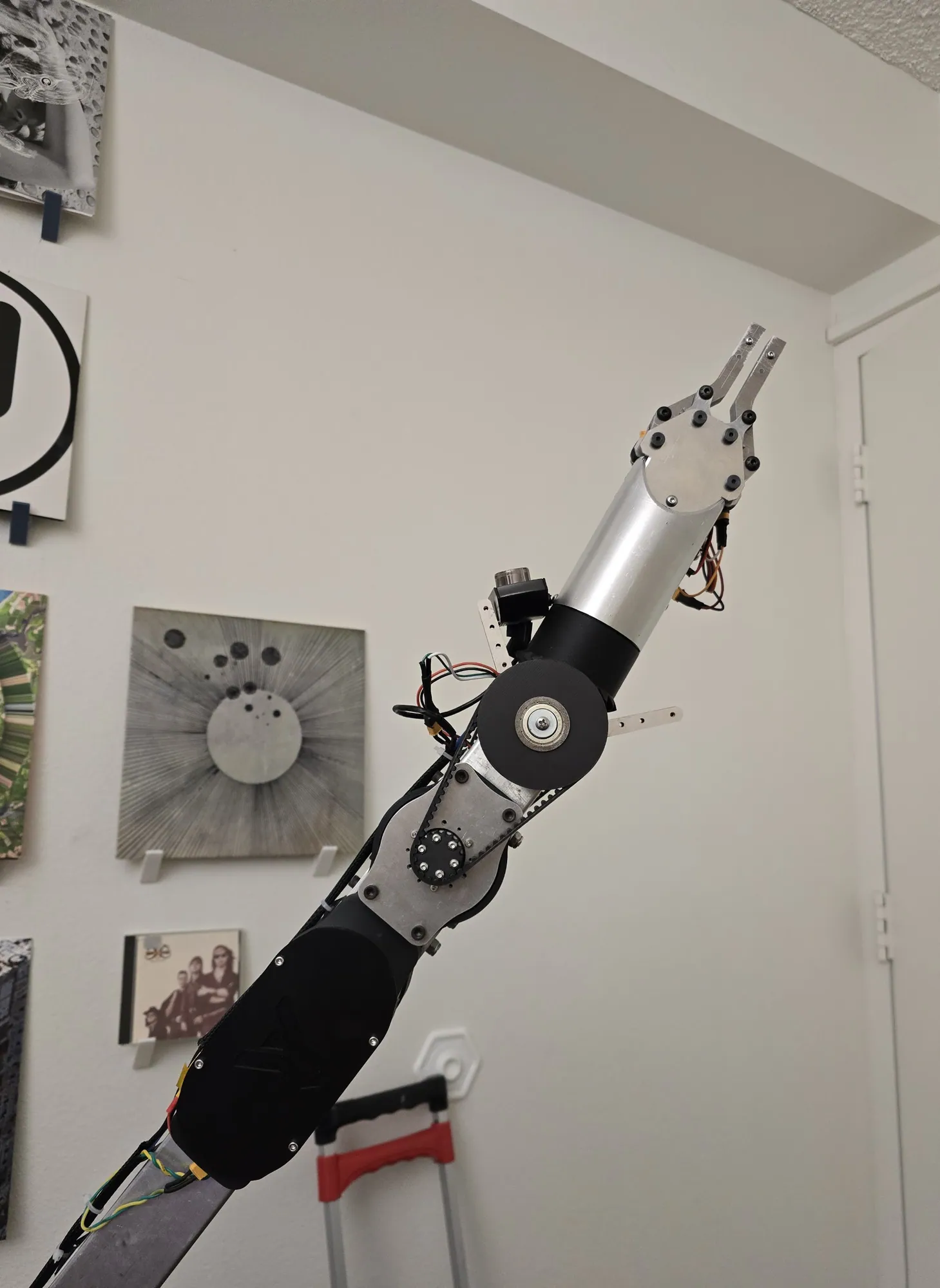
2.5 in 6061 tube, machined by hand off a radial marking jig.
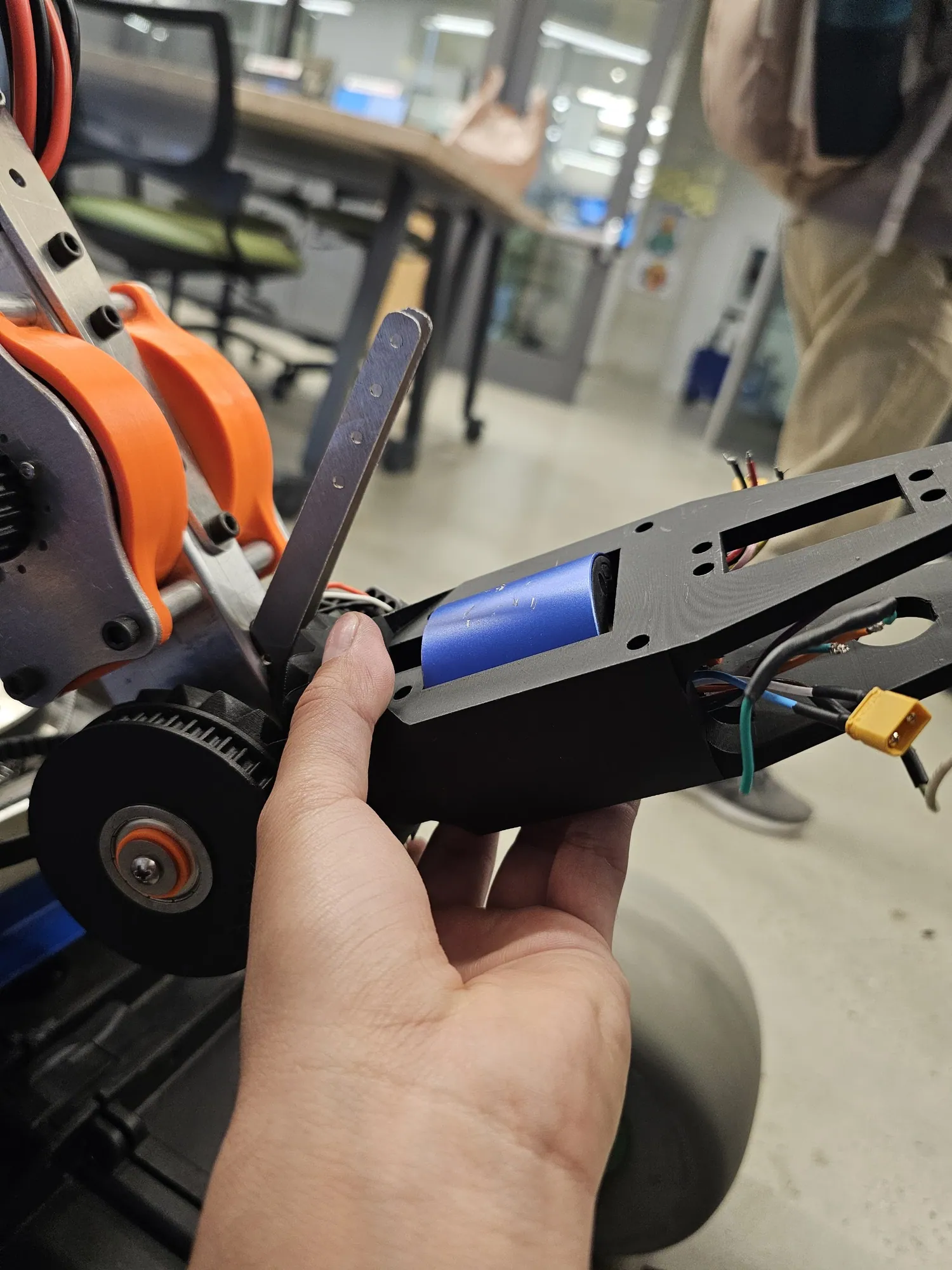
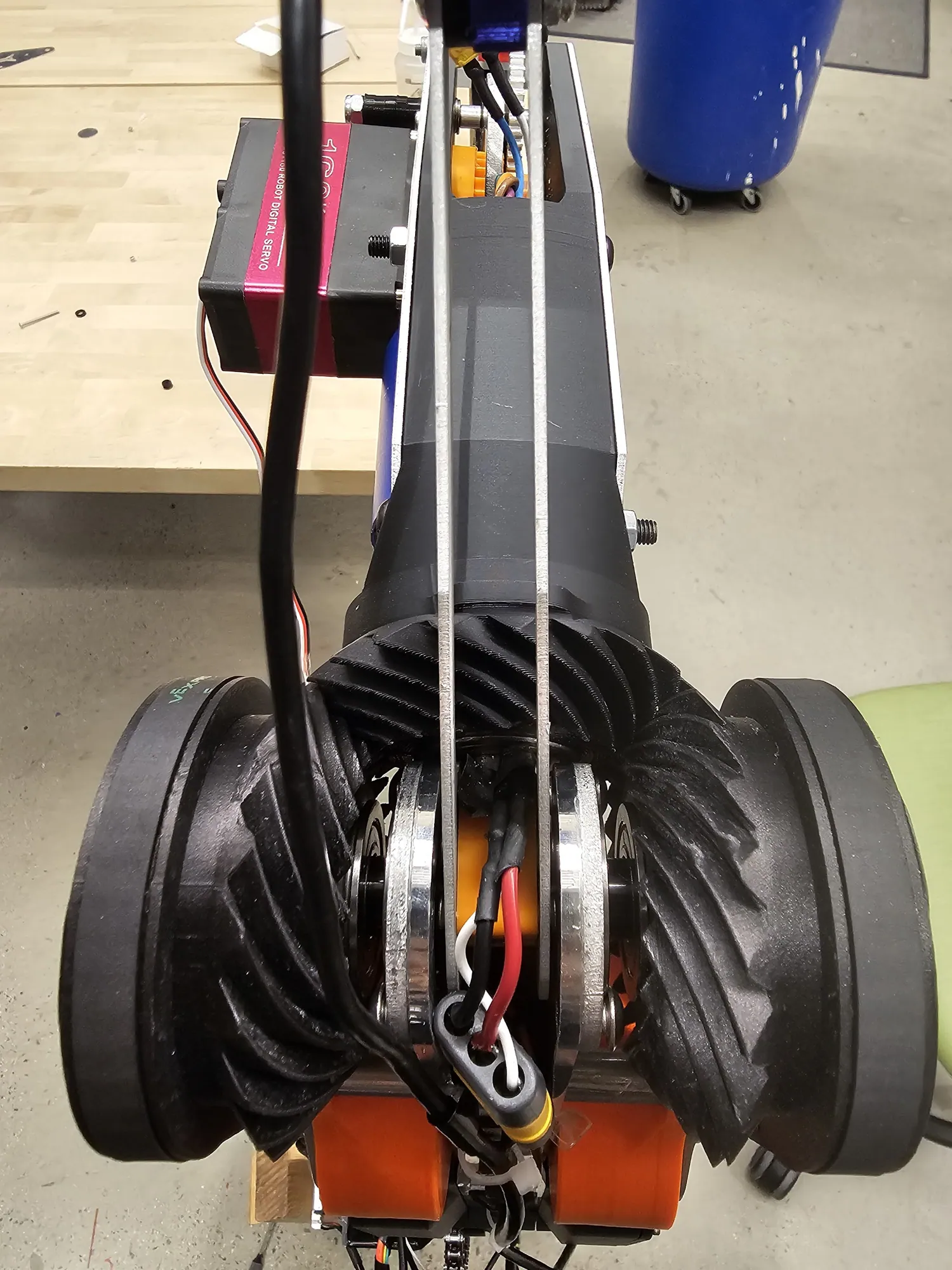
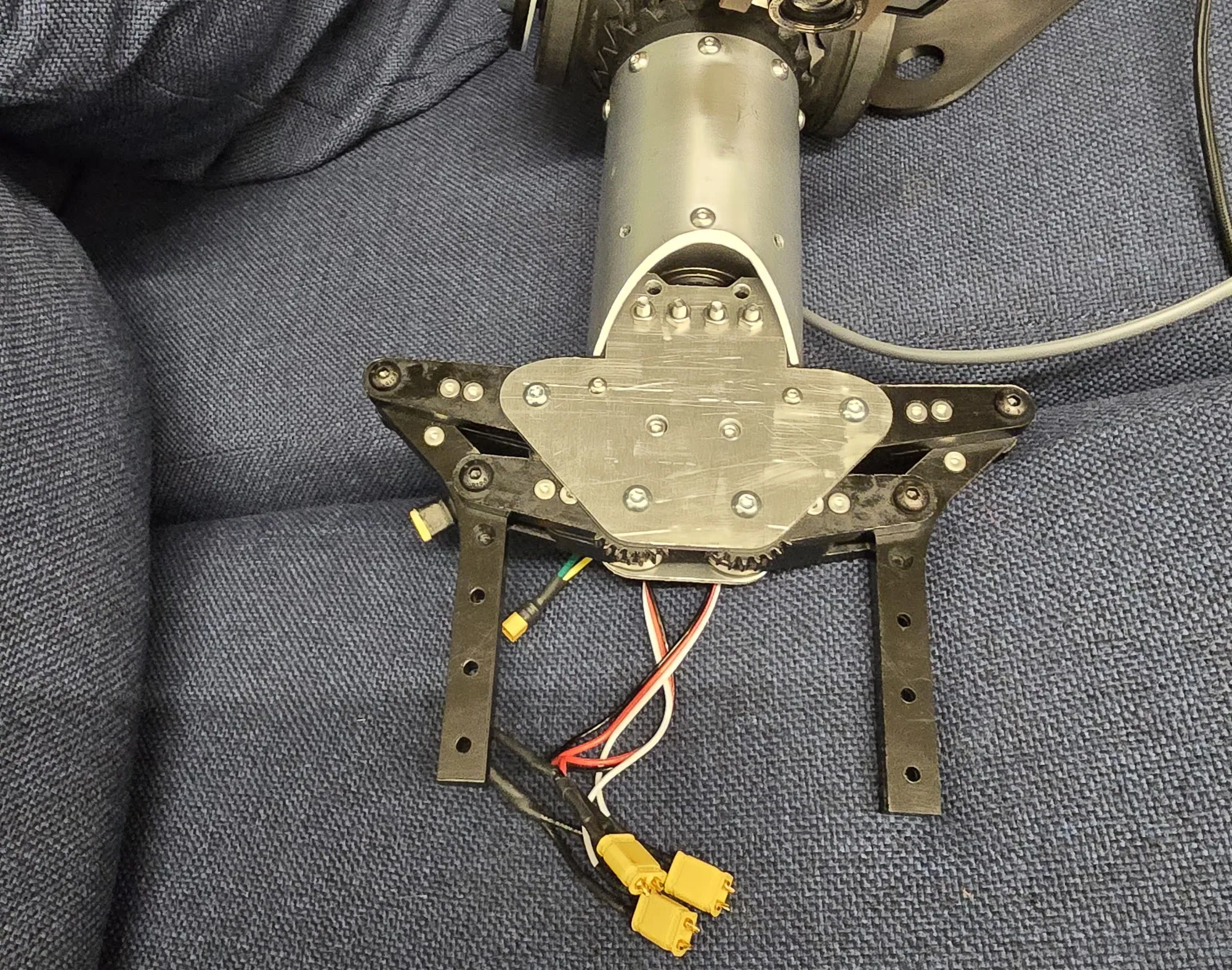
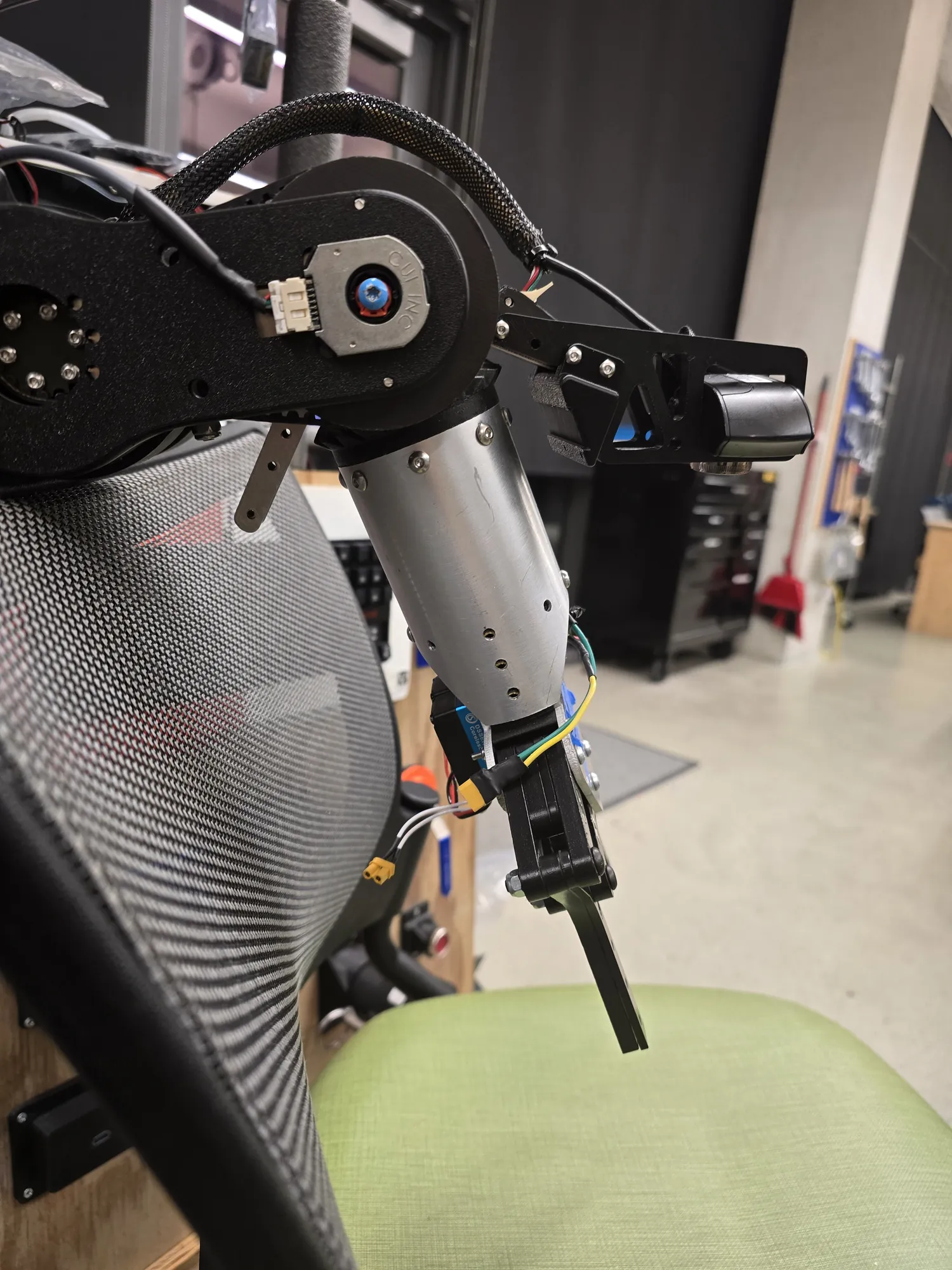
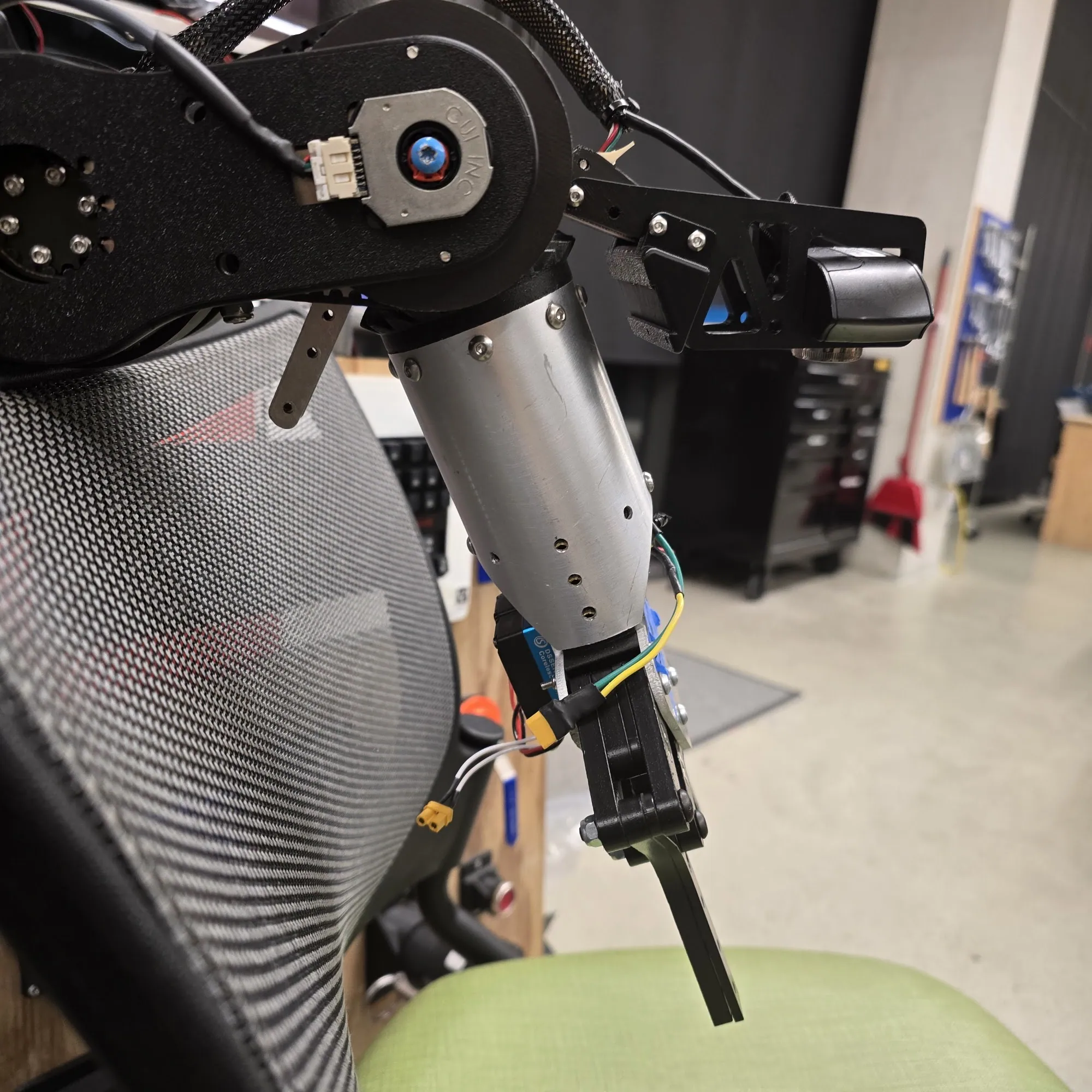
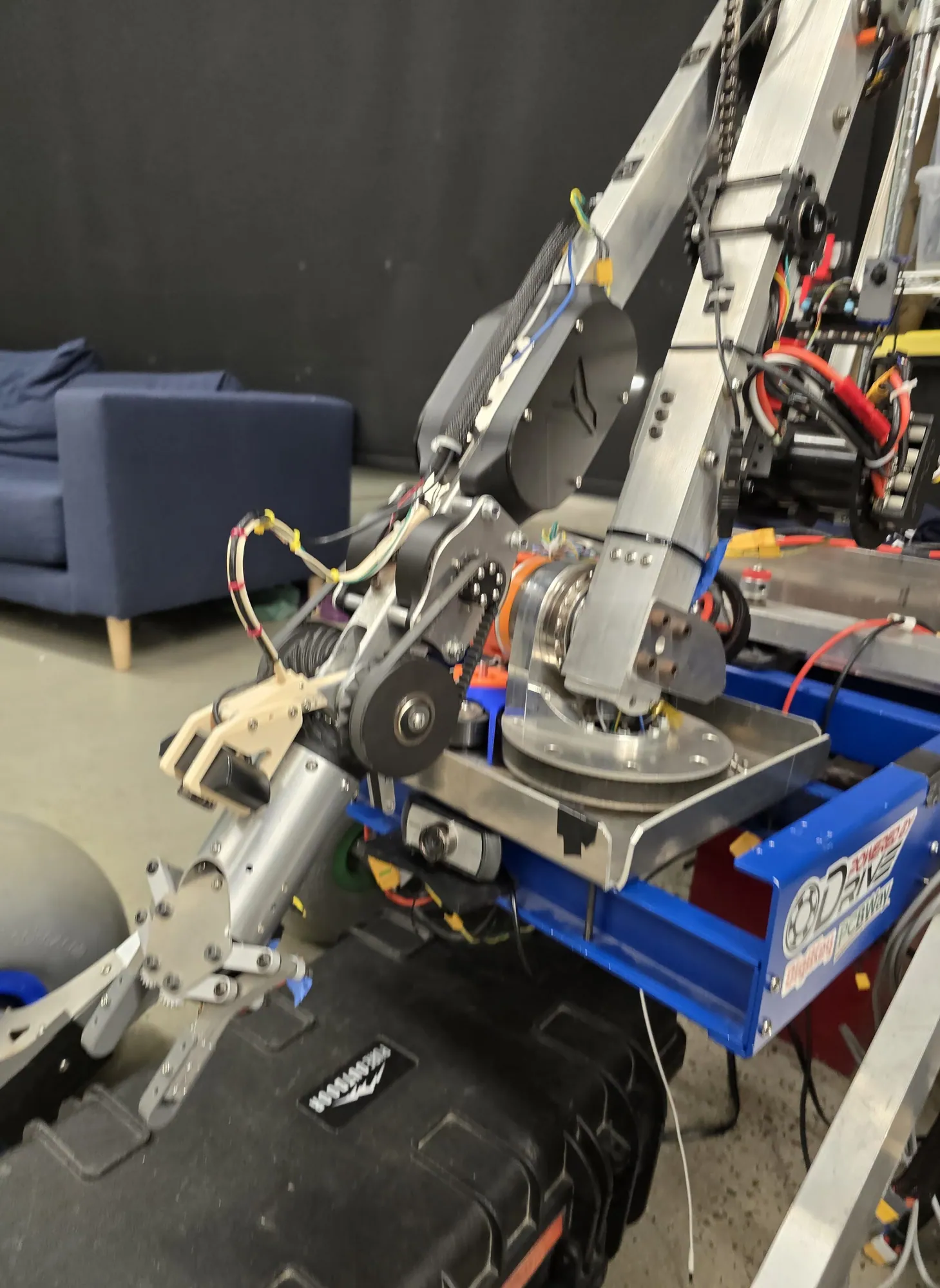
On the arm
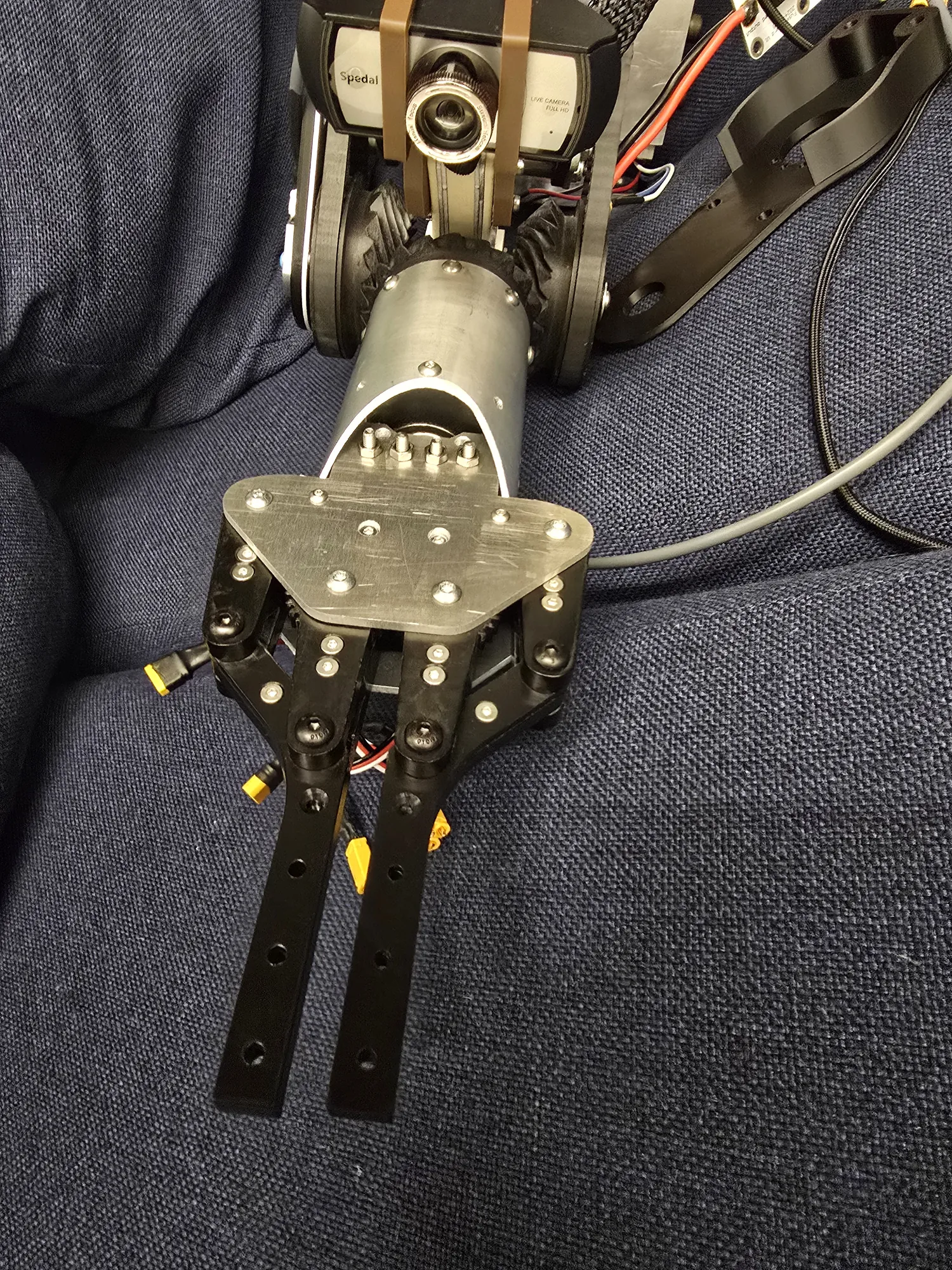
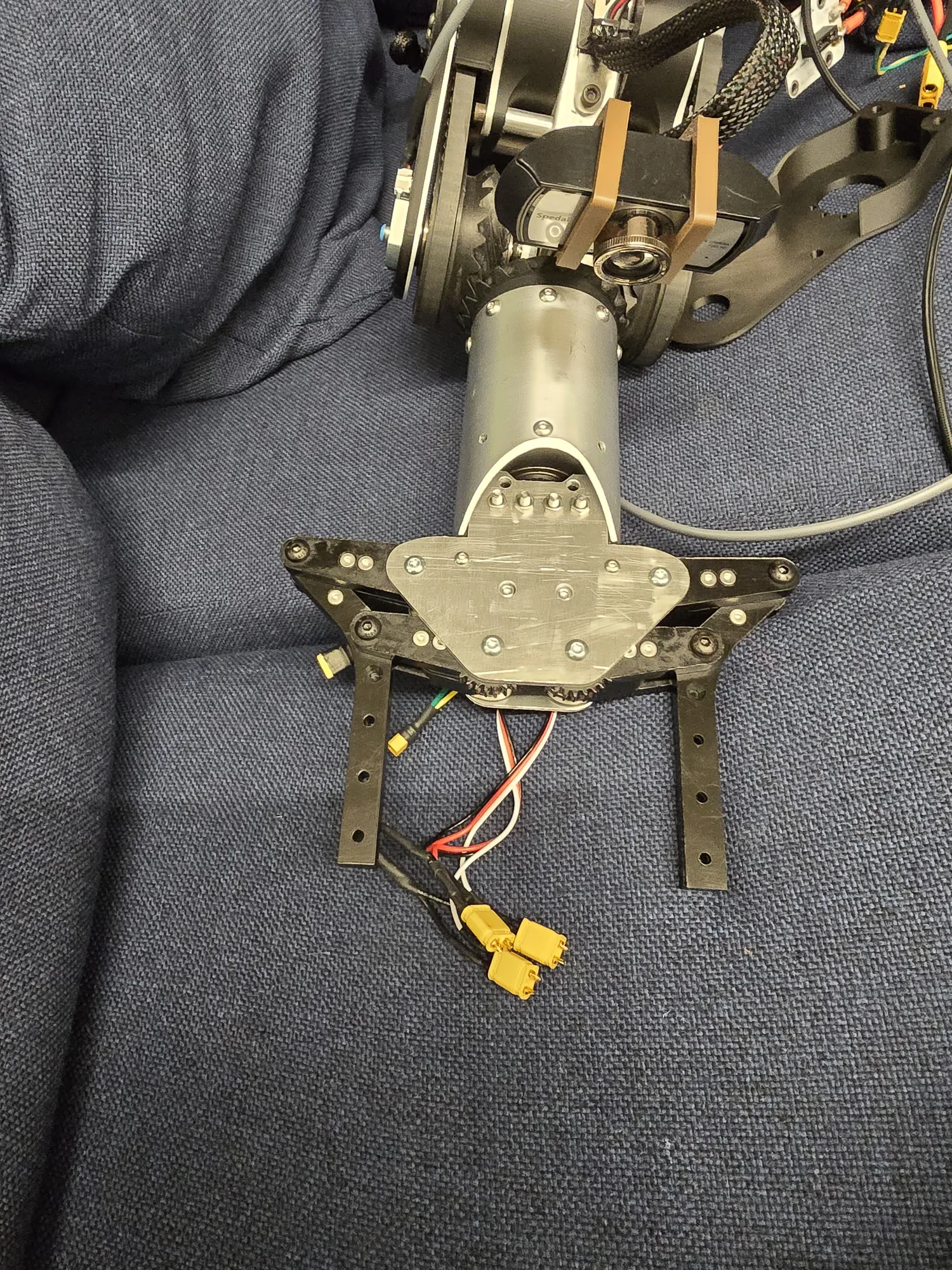
Bolted to the differential wrist, in the shop and on the rover.
Yonder Robotics